The Do’s and Don’ts of NFT Hydroponic Systems
 September 22, 2025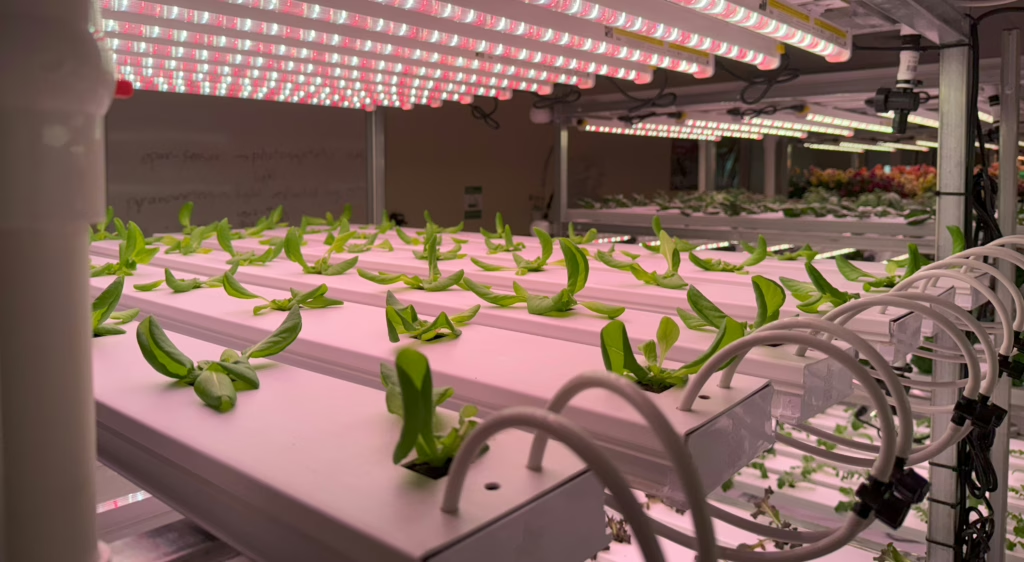
Young lettuce seedlings growing in NFT channels under LED lighting in a vertical farm. | Photo courtesy of Brandan A. Shur
Nutrient film technique (NFT) has become the entry point for many hydroponic growers worldwide, and for good reason. NFT is elegant in its simplicity: Lightweight channels carry a thin film of nutrient solution past the roots, delivering water and nutrition with efficiency. For leafy greens and herbs, it can be one of the most productive systems per square foot.
That reputation has fueled NFT’s expansion from backyard units to commercial-scale farms. But popularity doesn’t guarantee success. The same simplicity that attracts growers can also lead to misconceptions. NFT is not maintenance-free: It isn’t universally suited to every crop, and it’s certainly not forgiving when the basics are overlooked.
What NFT Is and Isn’t
At its core, NFT is about balance. A shallow stream of nutrient solution flows continuously or intermittently through channels, wetting the roots just enough for uptake while leaving much of the root mass exposed to air. When done correctly, plants receive a steady supply of water and nutrients while benefiting from abundant oxygen.
Growers sometimes stumble in what they expect from NFT. It isn’t a “set it and forget it” system. Pumps, slopes, and channels all need to work together. A pump failure can mean root death in a matter of hours. A slope that’s too shallow can drown roots. If it’s too steep, the film rushes by without enough contact.
NFT excels with fast-growing, shallow-rooted plants like lettuce, basil, and other leafy greens. But force it on crops that demand larger root volumes, like peppers or long-season tomatoes, and the system quickly shows its limits. NFT is powerful not because it does everything, but because it does some things extremely well.


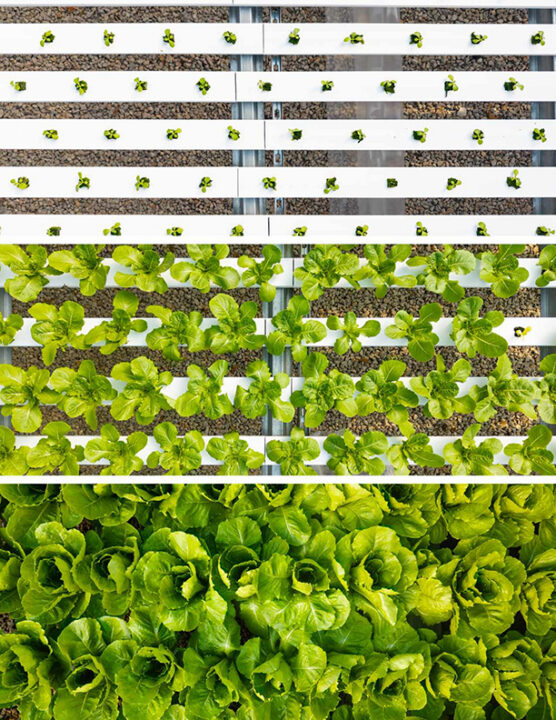
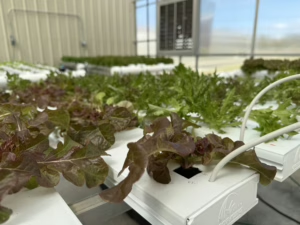
Mixed-leaf lettuce maturing in NFT channels inside a greenhouse, demonstrating the system’s capacity for uniform, high-quality greens. | Photo courtesy of Brandan A. Shur
Core Infrastructure Considerations
Every NFT system, whether a small teaching unit or a commercial installation, succeeds or fails on a few fundamentals.
- Channel slope and length. If the slope is too flat, channels become waterlogged, starving roots of oxygen. If it’s too steep, solution races by, leaving plants at the top short on water and those at the bottom oversaturated. A gentle slope of 1–3% usually provides the balance needed. Channel length matters too: Extend it too far, and nutrients deplete before reaching the last plant, creating uneven growth.
- Reservoir size and stability. Electrical conductivity (EC) and pH levels can swing quickly in undersized tanks, and once those fluctuations hit the rootzone, crop uniformity suffers. So while small tanks may look economical, they require precision. A well-sized reservoir acts as a buffer, smoothing daily fluctuations and protecting plants from stress.
- Pumps and flow rates. NFT depends on consistent flow. Undersized pumps, clogged filters, or poor distribution create weak spots that yield stunted plants. Redundancy is not a luxury—a backup pump or generator is insurance against crop loss.
- Cleanliness and maintenance. Algae, biofilm, and root debris accumulate faster than many first-time adopters expect. Left unchecked, they clog channels, reduce oxygen, and raise disease pressure. A disciplined cleaning schedule, between cycles and, if needed, during production, prevents small problems from becoming systemic losses.
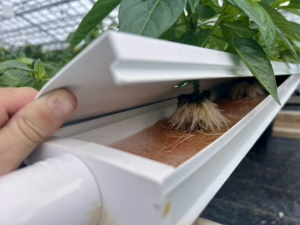
Healthy roots suspended in the nutrient film inside an NFT channel, illustrating the importance of consistent flow and oxygen availability. | Photo courtesy of Brandan A. Shur
Crop Selection for NFT Systems
Fast-growing, shallow-rooted crops are a natural fit for NFT systems. Lettuce, basil, and other leafy greens thrive in channels where roots can absorb nutrients quickly while benefiting from abundant oxygen. Turnaround is fast, inputs are efficient, and crop uniformity is achievable when the system is well maintained.
Some growers have pushed NFT beyond greens. Strawberries, compact cucumbers, and micro-dwarf tomatoes have all been trialed with varying success. But these adaptations require thoughtful design — larger channels, greater solution volumes, and stricter maintenance routines. They can work, but only when the system is tailored to the specific crop.
Long-season, large-rooted crops like peppers or indeterminate tomatoes usually outgrow NFT’s capacity. Roots clog channels, solution films break down, and oxygen availability drops. For these crops, substrate culture, DWC systems, or container production are more reliable fits.
More Than an Entry Point
The real opportunity with NFT isn’t just that it’s accessible, it’s that it builds growing habits that you’ll carry into every other hydroponic system. Measuring EC and pH, balancing oxygen with water, planning for redundancy, and matching crops to systems are lessons that apply far beyond NFT channels.
For new growers, NFT offers a chance to practice those habits in real time. For experienced operators, it remains one of the fastest and most efficient ways to produce leafy greens with consistency. On the surface it may look simple, but beneath that simplicity lies the discipline that defines modern hydroponics.