Studies Show Major Input Savings for CEA Lettuce and Spinach
 January 30, 2026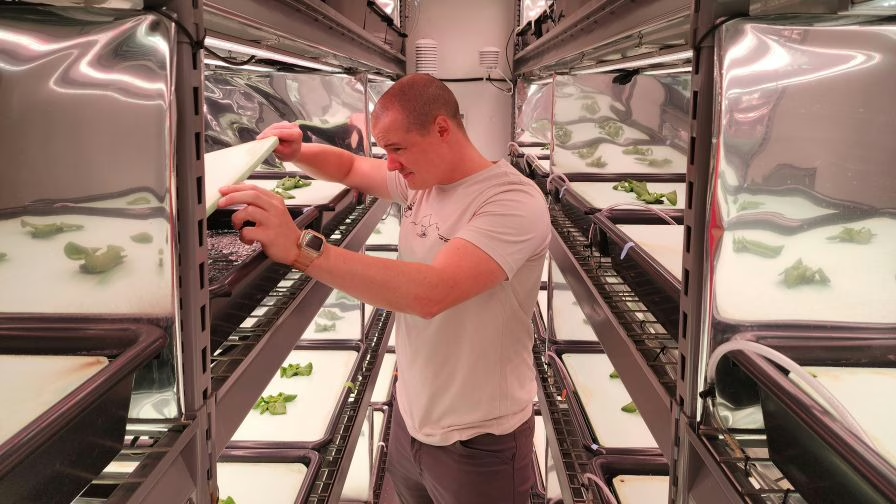
The UGA nutrient solution study. | University of Georgia
Two new HortScience studies from the University of Georgia and collaborators suggest that commercial CEA growers may be able to cut fertilizer and water use dramatically in hydroponic leafy greens without compromising yield or quality by rethinking how nutrient solutions are replenished.
Both studies evaluated six nutrient solution refill strategies for deep water culture lettuce and spinach, including constant drain-and-refill (the industry standard), full-strength and half-strength top-offs, electrical conductivity (EC) control, water-use-efficiency-based refilling (R-WUE), and lab-guided nutrient replacement (R-LAB). Trials were conducted in both a greenhouse and a CO₂-enriched vertical farm under three light intensities.
Across both crops and all environments, fresh biomass, leaf tip burn, and chlorosis were statistically similar among all refill strategies. Higher light levels increased growth, but they did not change the relative performance of the nutrient strategies.
Fertilizer and Water Use Dropped by More Than 90%
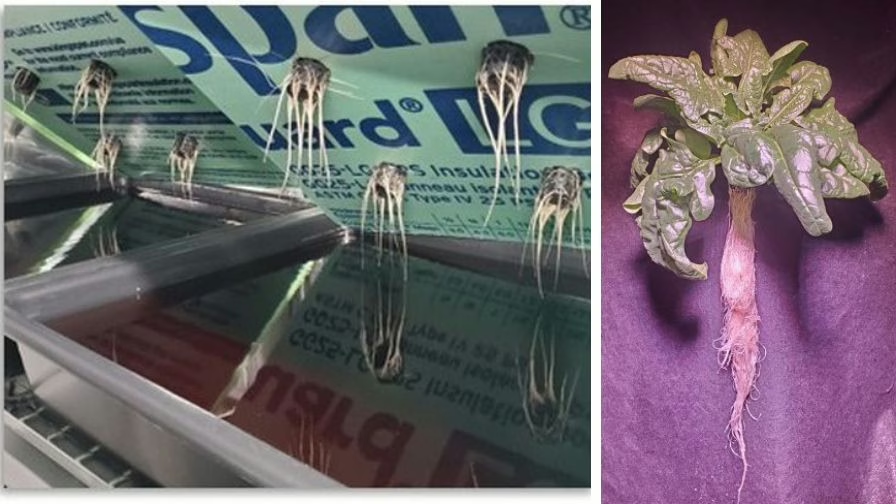
Deep water culture roots (L) and spinach (R). | University of Georgia
Where the treatments diverged was in resource use. For lettuce, diluted or targeted refill strategies reduced fertilizer inputs by up to 94% compared with drain-and-refill, EC control, or full-strength top-offs, with no reduction in yield or quality.




In spinach, fertilizer use fell by an average of 91% under the same low-input strategies.
Water use showed similar patterns. Drain-and-refill systems required more than seven to 10 times as much water as non-draining strategies over a 28-day crop cycle, while differences among the non-draining methods were small.
Leaf tissue analysis confirmed that nutrient concentrations remained within or above sufficiency ranges even when fertilizer inputs were sharply reduced, indicating that plants continued to receive adequate nutrition.
You can read the full research reports here.