Evaluating New Tech: ROI Considerations to Keep in Mind
 July 30, 2025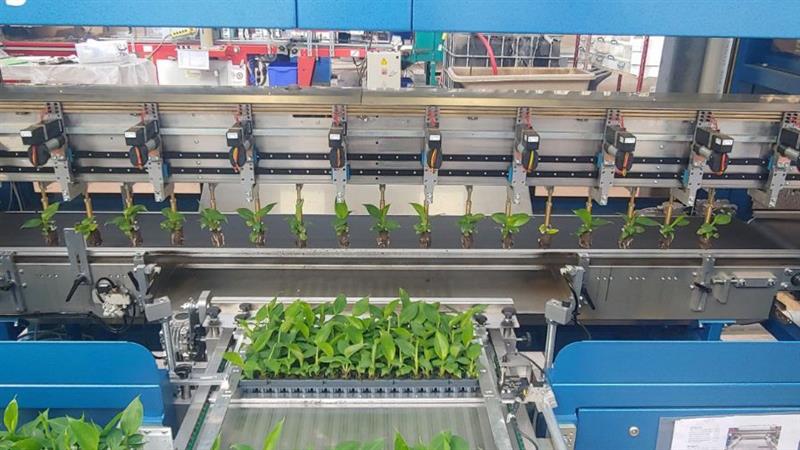
This TTA Packplanter Wireless automates transplanting with speed and precision outpacing manual labor to boost efficiency and reduce costs during peak season. | Freeman Herbs Inc.
Return on investment (ROI) might not be the most thrilling part of greenhouse management, but it’s a critical one. Every new piece of equipment, no matter how innovative, needs to earn its keep. While calculating basic ROI is a task fit for any accounting student, in a greenhouse setting, the true value of a tech investment often goes far beyond the numbers on a spreadsheet. We spoke with growers and industry experts to better understand how they approach ROI when evaluating or recommending new technology.
“It definitely starts with economics and finances,” says Jeff Stoven, propagation manager at Bailey Nurseries. “But once you move beyond basic finances, we also look at metrics related to labor, quality, consistency, availability, opportunity, and resource distribution. All these factors shape how we view ROI.”
How Timeline Matters (or Doesn’t)
Ask any grower about ROI, and you’ll likely hear the same benchmark: three to five years. It’s a common target in the industry.
“Growers are fairly frugal, and three to five years is a timeframe you hear a lot,” says Taylor Readyhough, regional sales manager for the Northeast at BioTherm Solutions. But that three-to-five-year window can be limiting, especially for infrastructure investments. Readyhough notes a growing trend of new owner-operators taking over existing facilities or younger family members stepping into leadership roles. These older sites often require major upgrades to stay competitive, and those decisions shouldn’t be based solely on short-term ROI. “Infrastructure improvements that are critical to the operation might have a six-to-eight-year payback, but that’s not a bad thing,” he says. “The right piece of equipment may take longer to pay off, but it could last 20 to 30 years. A six-to-eight-year payback on a 20-year system means you’ve got 12 years in the black.”
Still, there’s more to the decision than a fixed number of months. “I help justify project elements when we build the business case – why we’re making the investment and what outcomes we expect to achieve,” says Stoven. “If the payback period is longer, there needs to be additional factors that support the project.”

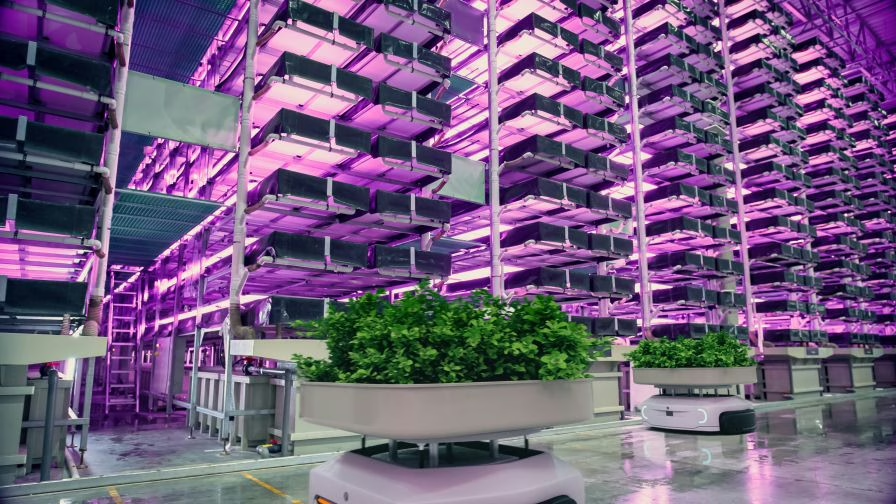
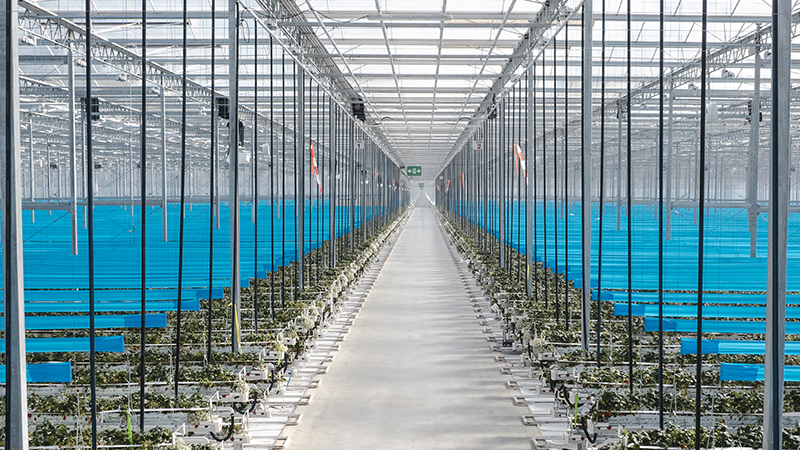
Stoven notes that secondary benefits can help push a project forward, even if the ROI timeline stretches beyond the typical target. “Those secondary benefits become especially important,” he says. “At Bailey’s, these factors are given significant consideration. If an investment doesn’t fall within the typical three-to-five-year payback window, it isn’t automatically dismissed. If the case can clearly be made that it addresses a safety issue, a worker quality issue, or an opportunity issue, those considerations are weighed just as heavily as the financial ones.”
Of course, those dollars going out still need to come back – ideally with some friends. “ROI is a primary motivator for Freeman’s investment in automation and technology,” says Adam Derkacz, production analyst at Freeman Herbs. He explains that any investment in new equipment should deliver clear benefits to core business functions, including quality, consistency, and throughput. “Even less tangible benefits should be modeled and included in the payback calculation,” he adds. “Every investment is competing for the same dollars as other potential projects, so we aim to keep our payback periods under three years.”
Automation and technological upgrades that reduce energy use and labor demands often deliver the greatest ROI. Energy pricing, and how much of it you use, can significantly influence calculations. And while high upfront costs can be intimidating, longer-term ROI projects are often worth it, especially in the face of rising energy costs and shrinking margins. “Unfortunately, I have seen some large, multigenerational greenhouse operations fail because they didn’t invest in infrastructure,” says Jim Rearden, CEO at BioTherm Solutions. “The industry is full of these stories. Every few years, a well-known name shuts down – not because they didn’t buy a transplanter, but because they were using 45% more energy than everyone else and couldn’t stay profitable.” Avoiding infrastructure upgrades due to longer ROI timelines can lead to serious consequences down the line. Rearden has seen this scenario unfold in large, multigenerational operations, often too late to recover. “Eventually, someone asks, ‘Have you looked at the books this week?’” he says. “Pretty soon, they’re in a financial hole they can’t climb out of, and by then, they can’t secure the financing needed to replace all the outdated equipment.”
For secondary benefits to include in ROI considerations, read the full article on GreenhouseGrower.com.