Case Study: How Windset Farms Does Much More with Less
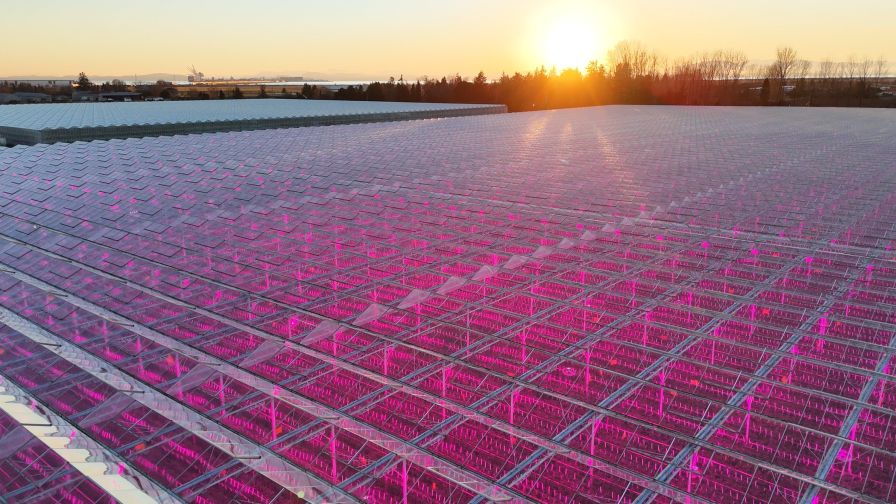
Windset Farms' facility in Delta, British Columbia. | Photo courtesy of Windset Farms
Over the last 30 years, brothers Steven and John Newell have substantially evolved and exponentially grown Windset Farms from a modest four-acre greenhouse into supersized status among greenhouse growers
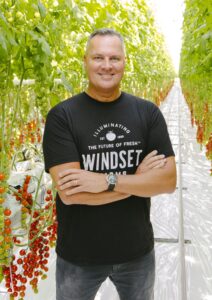
Steven Newell | Photo Courtesy of Windset Farms
Headquartered in Delta, British Columbia, Canada, Windset Farms manages the largest LED greenhouse in Western North America for year-round production of tomatoes and cucumbers. The company’s Santa Maria, Calif., operation is the largest single-site greenhouse in the U.S., focusing on tomatoes, peppers, and cucumbers. Additionally, Windset Farms maintains strategic partnerships with growers in Mexico.
CEO Steven Newell says the operation’s core market spans from Western Canada through the Mountain States into Arizona and Texas, with a substantial presence in Asia, as well.
“My brother and I started this company ourselves and built the greenhouse from scratch: stripping every form, gluing every pipe, getting our hands cut with the glass, mixing fertilizer, doing the growing, and driving the truck,” Newell says.
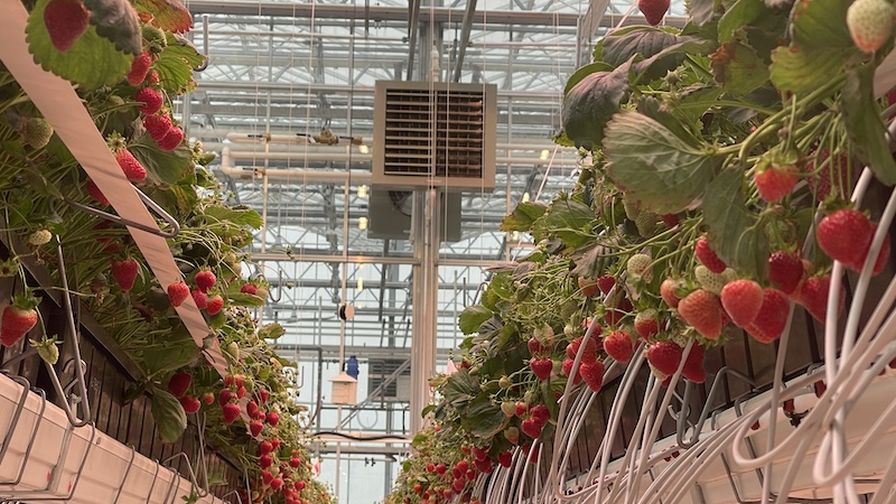

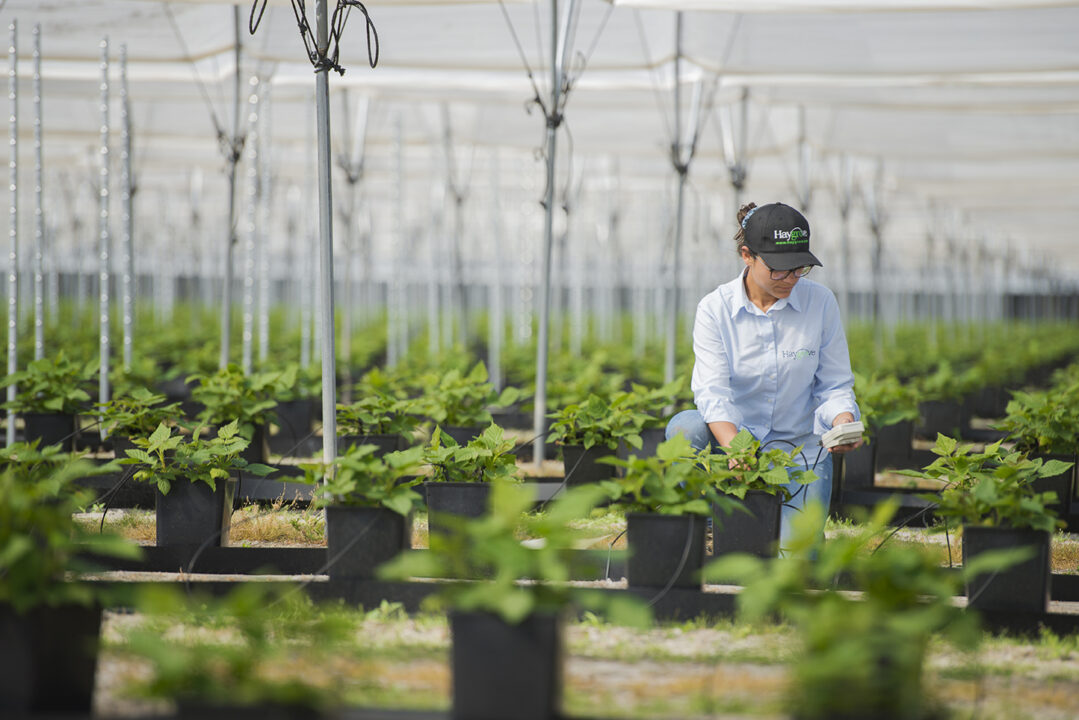
He credits Windset Farms’ ongoing success to its strategic taming of a trifecta of CEA challenges—water, energy, and labor—combined with a do-more-with-less philosophy and a bent toward sustainable practices.
Wealth of Water
British Columbia’s climate and mountainous geography bless Windset Farms with abundant and remarkably clean water. The farm is primarily hydroponic and utilizes ozonation to disinfect its water for recirculation; its filtration systems recycle 100% of the water until it’s fully consumed by the plants.
The same processes are in place with its California operations, which benefit from a strategically chosen location with abundant water.
“Our water supply is incredibly consistent,” Newell says. “Even during drought conditions we had no issues with our water.”
Additionally, the geology is characterized by sandy and gravelly deposits, which recharge local aquifers.
Managing Energy Usage
Nearly all (98%) of Windset Farms’ electricity in Delta comes from hydroelectric dams. This low-emission, renewable energy source powers the greenhouses’ tunable spectrum LED systems, which allow for precise lighting control to grow crops more effectively.
For heat and CO2 management at its Delta facility, Windset Farms limits the use of fossil fuels in the colder seasons with biomass boilers that burn carbon-neutral wood waste. In the summer, when the plants are more active and the vents are open to cool the greenhouse, the facilities transition to natural gas, which is burned during the day to provide CO2 for the plants. The heat that’s produced is stored in large insulated tanks and used to warm the greenhouse at night.
In Santa Maria, the consistently mild coastal climate acts as an inherent energy stabilizer, minimizing fluctuations in heating and cooling requirements. “We don’t have the high-altitude costs at night,” Newell says, “and in the daytime, we don’t have punishing heat. So we’re able to use Mother Nature to the max.”
Windset Farms leverages the mild climate to minimize natural gas use and maximize energy efficiency by capturing all CO2 emissions for use within its greenhouses. In addition, the company is currently evaluating the feasibility of capturing CO2 from a nearby sewage treatment plant.
“We’re looking at the possibility of taking the methane and other gasses that come off the effluent there and separating it out to make renewable natural gas,” he says. “Then we’d either pipe or truck the CO2 to our site, which would be a completely renewable source of CO2. We’re just scratching the surface on [this concept], but it’s definitely possible.”
A solar panel array covers the roof of the California facility’s packing house to generate additional electricity. Windset Farms is also investigating the financial and logistical benefits of tapping into the site’s geothermal capabilities to generate hot water in the future.
Taking Care of the Workforce
Newell raves about Canada’s Seasonal Agricultural Worker Program (SAWP), which allows Canadian agriculture employers to hire temporary foreign workers from Guatemala and other countries to fill labor shortages.
“It’s an exceptional program and a lot easier than the [U.S.] H-2A program,” he says. “Quite frankly, I believe it’s a program the U.S. should emulate.”
In addition, Windset Farms has taken advantage of the influx of immigrant labor into the country over the last three years. Newell says these individuals represent a strong and productive workforce eager to learn English, get educated in a trade, and establish better lives for themselves.
In California, Windset Farms chose to locate in a farm town with an abundance of local labor. “So, you’ve got every type of farm position that can be filled, including the labor to pick and pack that product,” he says. “We’ve got phenomenal offerings for workers, with year-round employment. We have a very robust bonus system on top of our base rate. This brings great stability and happiness into our corporate and organizational culture.”
Corporate Culture
Newell says that going forward, Windset Farms will continue to follow the mantra that has taken them this far.
“First, you get good,” he says. “Then you get big, and not the other way around. We’ve had that philosophy for 30 years as a family business. We want operational excellence. We want profitable greenhouses. We want a very positive corporate culture with a good team of people. At the end of the day, without that, all you have is a pile of glass, steel, and aluminum.”
This article is a part of CEAg World’s Industry Report: Greenhouse Produce. Download the full report here: https://www.ceagworld.com/industry-reports/.