The Streamlined H-2A Look: What Growers Should Know
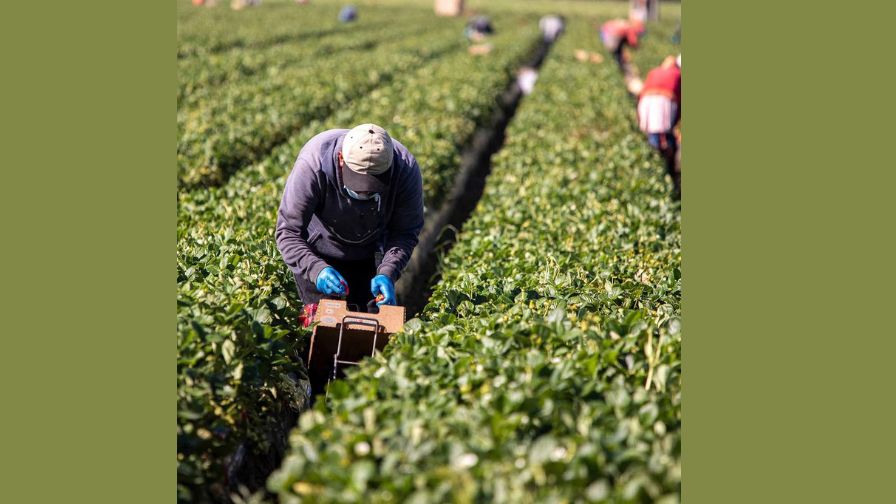
The DHS' announced a final rule to streamline the filing process for certain temporary agricultural worker petitions. | Photo courtesy of the International Fresh Produce Association (IFPA).
The Department of Homeland Security has announced a final rule, effective Oct. 2, 2025, to streamline the filing process for certain temporary agricultural worker petitions. According to a news release from the U.S. Citizenship and Immigration Services (USCIS), the new rule allows the government entity to begin processing petitions for H-2A temporary agricultural workers while the Department of Labor reviews the requested employment to ensure it would not harm American workers.
Starting Oct. 2, petitioners seeking unnamed beneficiaries can electronically file the newly published Form I-129H2A, Petition for a Nonimmigrant Worker: H-2A Classification, after DOL issues a notice of acceptance of the application for temporary labor certification (TLC) and before DOL approves a TLC.
Petitioners must provide the ETA case number issued by DOL with the initial filing. This allows USCIS to immediately begin processing electronically filed petitions with unnamed beneficiaries and gives petitioners the flexibility to file with USCIS sooner. USCIS will not approve any petitions until after DOL has approved the corresponding TLC.
The new rule also would revise the methodology used to determine Adverse Effect Wage Rates (AEWR) for H-2A agricultural workers. Under the new rule, DOL will base AEWRs on state-level wage data from the Bureau of Labor Statistics’ Occupational Employment and Wage Statistics (OEWS) survey, rather than the previously used USDA Farm Labor Survey.
The Florida Fruit & Vegetable Association (FFVA) issued the following statement:



“The Florida Fruit & Vegetable Association welcomes recent actions by the U.S. Departments of Labor and Homeland Security to address longstanding concerns with agricultural labor policies, including updates to the AEWR methodology and improvements to the H-2A filing process. These measures offer immediate relief to Florida farmers and demonstrate the administration’s understanding of the unique challenges faced by our growers and their workforce.
“While these efforts move toward a fairer, more stable system, a lasting solution depends on Congressional action. Volatile survey-based wage data and the lack of legislative reform continue to competitively disadvantage U.S. growers. We thank the administration for taking ahttps://www.gfvga.org/ction in the absence of Congressional movement, and we urge Congress to pass fundamental H-2A reform, including a reassessment of what constitutes adverse effect. FFVA remains committed to working with policymakers to build a system that fully supports American agriculture and ensures a stable food supply.”
Chris Butts, Executive VP of Georgia Fruit and Vegetable Growers Association (GFVGA), commented:
“For years, our members have faced skyrocketing labor costs that threatened the viability of family farms in Georgia. These new wage rules bring much-needed relief and help restore balance to the H-2A program. By aligning wages with real market conditions, our growers can plan for the season with certainty. We applaud the swift action by DOL and DHS to address long-standing concerns.”
Editor’s note: This article was originally published on GrowingProduce.com, our sister brand.