2025 Emerging Leader Finalist: Trevor Terry, Kentucky Horticulture Council
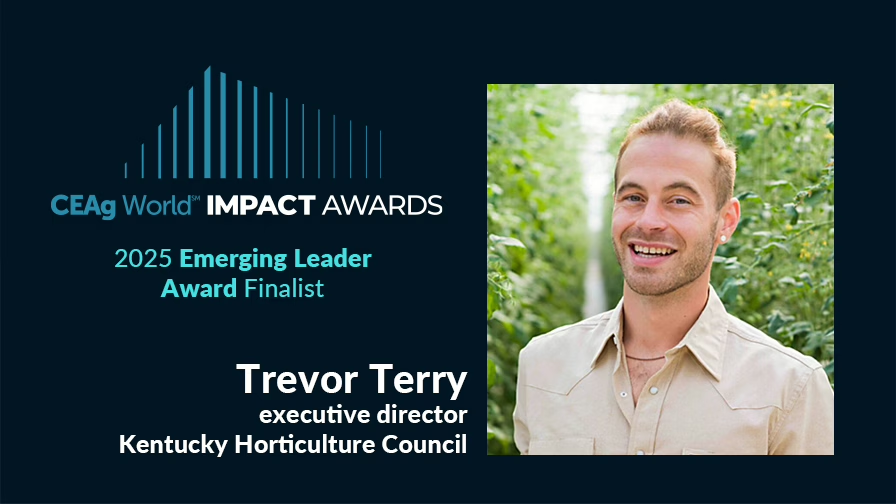
Trevor Terry is one of three finalists in the Emerging Leader category of the inaugural CEAg World Impact Awards.
 Trevor Terry of the Kentucky Horticulture Council is one of three finalists in the Emerging Leader category of the inaugural CEAg World Impact Awards. The Emerging Leader Award recognizes a rising talent in CEA who demonstrates exceptional promise and leadership with new solutions, strategic thinking, or leadership within their community or industry. This award recipient will be someone who drives change through the adoption of cutting-edge technologies and ideas that enhance productivity, sustainability, and efficiency, shaping the future of agriculture. Learn more about Terry below and watch CEAgWorld.com for more profiles of our finalists.
Trevor Terry, executive director of the Kentucky Horticulture Council, says his job is often to clear the path and let others shine. With his background in operations and strategic policy acumen, Terry is well positioned to drive systemic growth in the CEA sector. Through domestic and global partnerships—in particular via his close work with experts in the Netherlands—Terry has blazed a path for ongoing success for the Kentucky horticulture industry.
Kentucky Fresh Harvest
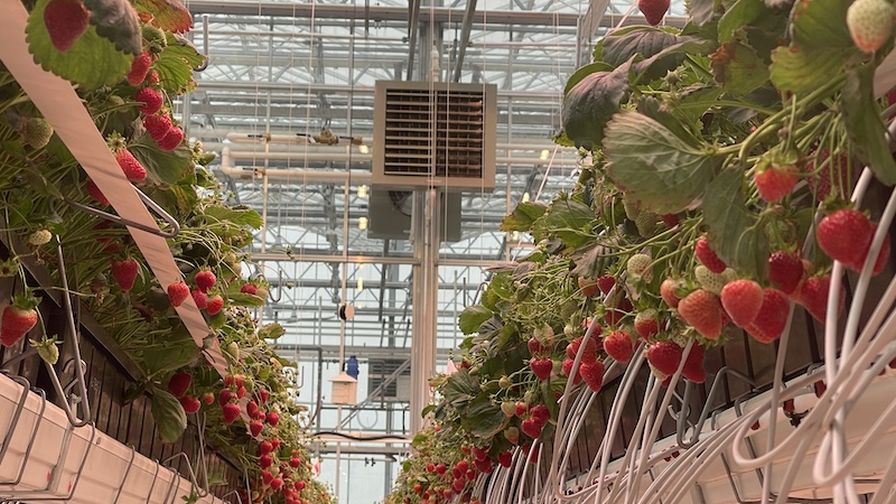
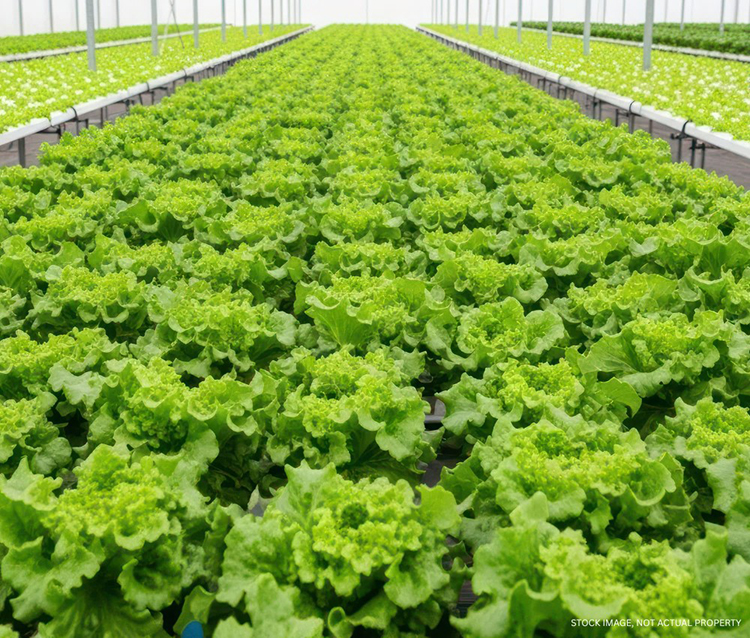
In 2016, Terry became the first employee at Kentucky Fresh Harvest, a greenhouse vegetable operation based in Lincoln, Ky. Kentucky Fresh Harvest now boasts more than 11 acres of greenhouse production and more than 2 million pounds of grape tomato production for wholesale distribution.
But nearly a decade ago when the company was just getting off the ground, Terry quickly became the de facto “marketing guy.” He played a key role in translating production realities into a story buyers and investors could believe in, while making sure the company could also deliver on it.
Later serving as the chief marketing communications officer, Terry defined the farm’s communications strategy and developed a brand that engaged the consumer. He worked closely with Chief Operating Officer Dr. Shubin Saha and the rest of the team to model yields, develop pricing strategies, and connect with regional buyers who valued consistency and transparency.
“That experience taught me how hard it is to scale a farm business responsibly, and how important clear, honest communication is between growers, marketers, and customers,” Terry says. “Shubin used to say, ‘There’s no money in growing vegetables, only in selling them,’ and I think about that lesson every day.”
When Terry looks back at his achievements so far, he recalls eating one of the first tomatoes grown at Kentucky Fresh Harvest. There was much discussion about regulations prior to operating the greenhouse. After years of back and forth with contractors in Israel and the Netherlands, the first tomatoes show the fruits of their labor.
“When we started building Kentucky Fresh Harvest in 2016, the state had no legal definition of a greenhouse in the Housing and Building Code. Regulators initially classified the project as a low-hazard waste-storage facility,” Terry says. “Through coordinated advocacy by growers and support organizations, we helped create a proper greenhouse designation (retail and commercial), a change that now benefits every protected-ag operation built in Kentucky.”
Looking to the Netherlands
Terry served as an economic policy officer at the Netherlands Consulate in Chicago in 2023 and 2024, where he focused on facilitating international partnerships to help expand Kentucky’s protected agriculture footprint.
He says that collaboration was about tackling the real, structural challenges of building a protected agriculture ecosystem in Kentucky that could compete with the major greenhouse hubs in places like Leamington, Ontario, and the Netherlands. Those greenhouse hubs grew because business, government, and research institutions worked in lockstep to build the infrastructure that makes large-scale horticulture possible, he says.
In his current role at the Kentucky Horticulture Council, Terry maintains an ongoing partnership with the Netherlands. “Our partnership is focused on learning those lessons and applying them locally in everything from energy pricing and circular systems to workforce development,” Terry says. “The work by Kentucky and Netherlands collaborators over the last six years has helped unlock the expertise and investment that grew Kentucky’s protected ag footprint nearly tenfold between 2017 and 2022. It showed me that global partnerships like this can only work when they start with local relationships.”
Following Dutch influence on energy efficiency, Terry and the Kentucky Horticulture Council are currently advocating for a number of priorities on energy policy:
- Net-Metering Parity: Kentucky’s current net-metering rules credit producers below the retail rate for electricity they send to the grid, Terry says. The council supports restoring one-to-one price parity, as states like Illinois have done, so growers receive the same rate they pay for electricity purchased from utilities.
- Clarity and Fairness in Tariffs: A practical cap of about 45 kWh per day limits net-metered production for many small growers, Terry says. Some tariff provisions allow more on-site generation, but the rules vary across utilities. The council is encouraging the Public Service Commission to establish a clear, consistent framework and an independent review process for disputes.
- Real-Time Rate Transparency: In the Netherlands, producers can see real-time energy prices through open-data systems that connect directly to public utilities, Terry says. This allows growers to decide whether to use or sell the energy they generate, often from natural-gas CHP systems, to help balance the grid. Dutch greenhouses now supply roughly 9 percent of the nation’s total energy through these integrated systems.
- Boiler Regulations: Kentucky’s boiler code remains among the strictest in the region, Terry says. While safety is non-negotiable, the current policy requires permitting the entire heat-distribution network rather than just the generation system. Aligning with neighboring states, he says, where regulation stops at the first heat exchanger, would reduce cost and complexity without compromising safety.
To ensure that policymakers make decisions that benefit the CEA industry, Terry suggests inviting stakeholders to your operation and proposing a specific request.
“You can do more with people’s time if you invite them for a visit. Show, don’t tell,” Terry says. “Passion for this is contagious. If you can find a way to convey the importance and your passion, you can communicate clearly, too.”
The winners of the CEAg Impact Awards will be announced and honored live on stage at the kickoff ceremony for the CEAg World Conference and Expo on Nov. 20, 2025, in Durham, N.C. To learn more and join us at the conference, visit CEAgWorld.com/events.