Global Greenhouse Outlook Signals a More Disciplined Growth Phase
 March 5, 2026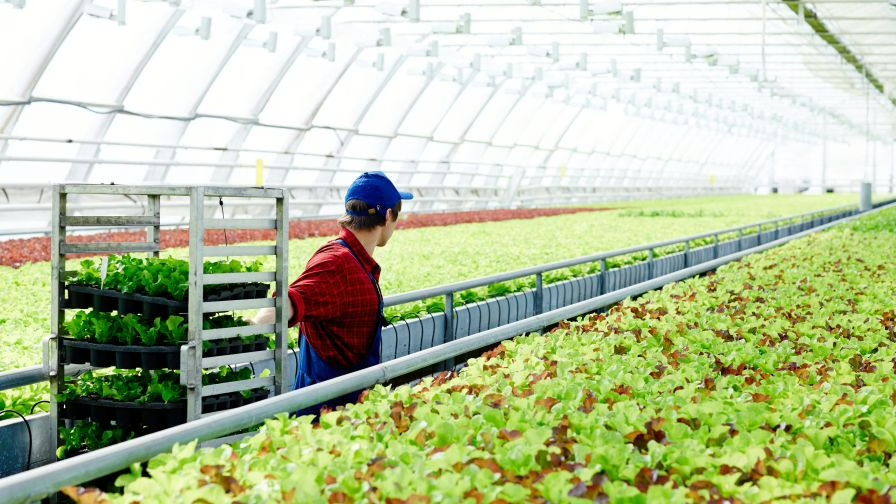
Photo courtesy of Adobe Stock
A new report from RaboResearch Food & Agribusiness outlines a shifting landscape for protected horticulture, marked by slower but more targeted growth, rising policy influence, and renewed focus on operational resilience.
The analysis finds that Dutch suppliers to the greenhouse sector are entering 2026 with more cautious expectations following several years of rapid expansion. While global sentiment has softened, high-tech horticulture in North America remains one of the few regions where suppliers still anticipate growth, reflecting continued investment interest despite tighter capital discipline.
Self-Sufficiency Goals Reshape Investment Decisions
Across North America, declining self-sufficiency rates for greenhouse vegetables are emerging as a key policy and market signal. In the U.S., self-sufficiency remains low for tomatoes, cucumbers, and bell peppers, even as per-capita consumption has stayed relatively stable. Rabobank notes that this gap is driven less by demand shifts and more by sustained import competition, particularly from Mexico, and by the long lead times required to bring new greenhouse capacity online.
Canada presents a more expansion-oriented picture. Ontario continues to dominate greenhouse production, while provinces such as Quebec are actively pursuing higher domestic supply through policy support and planned acreage expansion. British Columbia, meanwhile, is focused on strengthening technical competitiveness amid evolving trade dynamics.
Crop Mix, Energy, and Automation Take Center Stage
Globally, suppliers expect the strongest near-term growth in strawberries and leafy greens, while outlooks for fruiting vegetables such as tomatoes and cucumbers are more measured. Alternative crops continue to attract experimentation but are unlikely to reach commercial scale in the next five years due to pricing and agronomic hurdles.


The report also highlights structural forces shaping the next phase of greenhouse development: rising energy costs, climate risk, and labor availability. These pressures are accelerating consolidation, driving investment in automation — particularly harvesting robotics — and increasing interest in energy-efficient solutions, including potential synergies with data centers that can supply residual heat.