Research Brief: Breeding a Better Cucumber
 October 14, 2026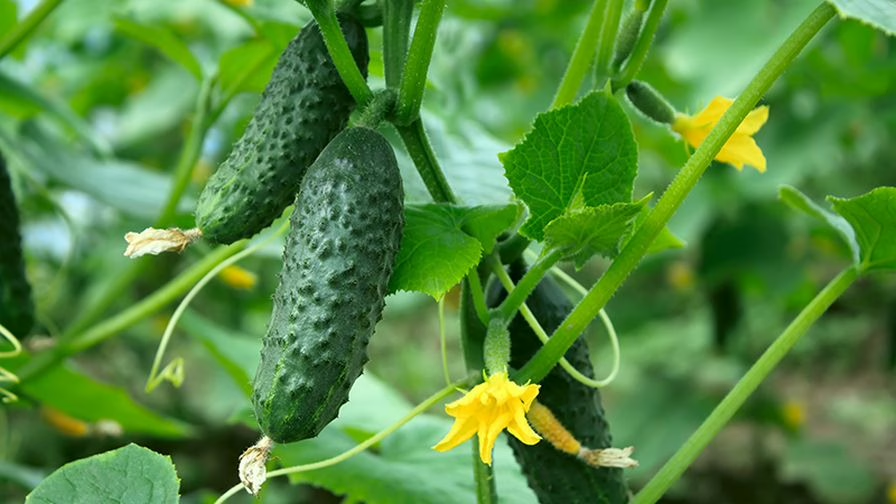
Photo: Adobe Stock
Published in Nature Genetics (February 10, 2026), research led by Zhangjun Fei at the Boyce Thompson Institute of Cornell University offers a more complete picture of cucumber genetics by analyzing 39 high-quality genomes instead of relying on a single reference. This broader approach uncovered nearly 172,000 large-scale DNA differences (called structural variants) that can influence traits such as fruit shape and internal quality.
The study suggests that these larger genetic changes may play a bigger role in crop performance than the smaller mutations breeders have traditionally focused on. While many minor mutations accumulate over time, structural variants are more likely to be removed during breeding because they can negatively affect plant health and consistency. That may help explain why some varieties still show uneven performance even after careful selection.
Researchers also found evidence that breeding with wild relatives—often used to introduce traits like stress tolerance—can bring along less desirable genetic traits that are harder to detect. By accounting for these larger genetic differences, prediction models improved their ability to forecast outcomes like fruit shape and quality.
Editor’s note: This article was originally published in our 2026 Industry Report: Greenhouse Produce.