Research Brief: How Agrivoltaics Could Improve Vertical Farming Economics
 October 1, 2026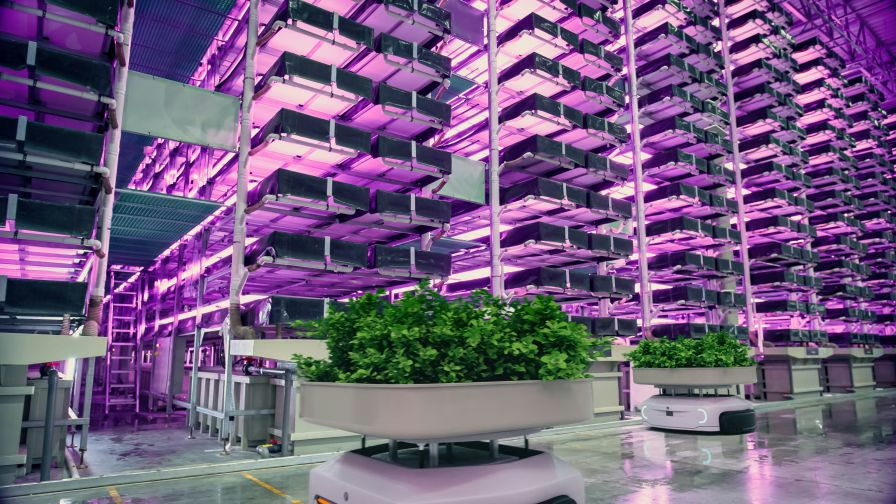
Indoor vertical farm. | Photo courtesy of Adobe Stock
Currently, one of the biggest challenges facing the vertical farming sector is the economics relating to energy costs. However, a new study published in Sustainability, titled “Lighting Energy and Revenue Analysis in an Agrivoltaic Agrotunnel for Lettuce and Swiss Chard Production,” suggests that Agrivoltaics (the combination of agricultural production with solar photovoltaic technology) could help to meaningfully address the hurdle.
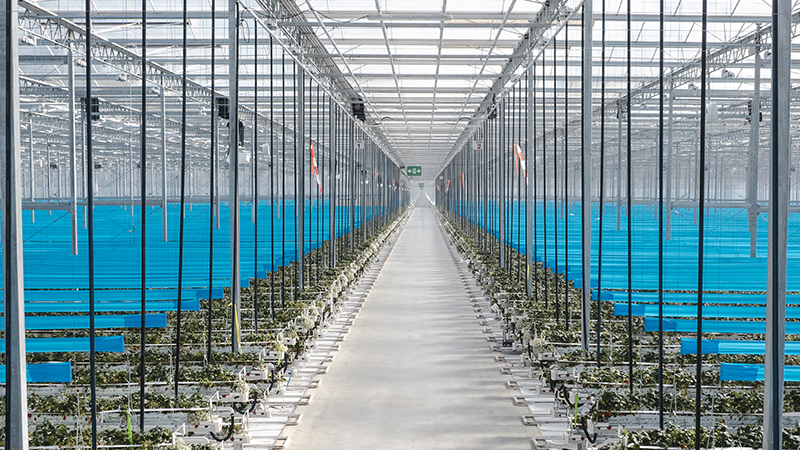
The research evaluated the energy requirements, lighting optimization, and revenue potential of a vertical farming lettuce production system developed by Food Security Structures Canada in Ontario, with results pointing to on-site solar generation as a possible solution for one of CEA’s largest operating expenses.
How Agrivoltaics Can Cut Vertical Farming Costs
Technoeconomic analysis found that an agrivoltaic system helped to reduce lifetime net present cost by 13.2% and levelized cost of electricity reductions by 13.2% and 44.2%, respectively, compared to the grid-only power supply. Additionally, researchers found that changing the spacing between LEDs and growing walls, with 20 cm variations, could result in 16.6%–17.8% changes to average photosynthetic photon flux density without increasing energy consumption.
What the Study Means for CEA and Vertical Farmers
The modeled agrotunnel generated annual lettuce revenues ranging from $61,735 to $116,685, depending on the planting strategy, crop mix, and market price. The highest revenue came from a multiple-plant-per-pot spring mix without Swiss chard. The system also achieved specific yields above 70 kg/m²/year when calculated on cultivation area, reaching 75.4 kg/m²/year for Romaine and 70.8 kg/m²/year for spring mix without Swiss chard. Additionally, the study’s economic analysis found that luxury and mid-range pricing above $20/kg maintained ROI above 10% across the capital-cost scenarios evaluated.
The researchers also found substantial geographic differences in potential revenue. Canada and the U.S. produced the highest modeled revenues, while Mexico generated considerably lower revenues. Ontario’s premium market offered the highest revenue potential among the markets examined, while metropolitan markets such as Toronto, New York, and Montreal generally showed higher lettuce prices.




For commercial CEA operators, the research suggests that solar integration, lighting optimization, and premium crop positioning could be important levers for improving vertical farm economics — particularly in northern markets with high electricity costs and strong demand for locally grown leafy greens.
For additional information on the applications of agrivoltaics in CEA, read the full study here.