2025 Educator/Researcher Finalist: Roberto Lopez
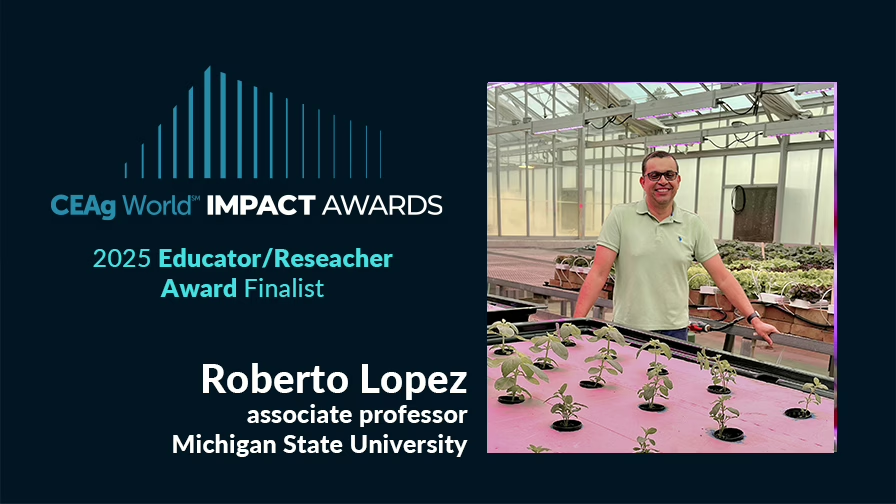
Roberto Lopez is one of three finalists in the Educator/Researcher category of the inaugural CEAg World Impact Awards.
 Roberto Lopez, Ph.D., associate professor, Michigan State University, is a finalist in the Educator/Researcher category of the inaugural CEAg World Impact Awards. The Educator/Researcher Award spotlights an individual whose outstanding contributions have advanced CEA methods through research, education, and outreach. This individual demonstrates leadership, fosters collaboration, and shares insights that enhance CEA practices, sustainability, and productivity, while exemplifying innovation, professionalism, stewardship, and a lasting impact on the CEA industry. Nominee must be employed with a college, university, or research facility.
Learn more about Dr. Lopez below, and watch CEAgWorld.com for more profiles of our finalists.
Roberto Lopez traces his horticultural journey back to childhood in the arid heart of New Mexico. “I had a garden with vegetables and flowers when I was 5 years old,” Lopez says.
Not until a summer internship at Michigan State University (MSU), which took him to AmericanHort’s Cultivate event, did he realize horticulture was a professional path. It soon became a passion that would shape his life.
Graduate school sealed it, and he dove into controlled environments, working on light and temperature research for a range of crops — mostly flowers at first. “Growing up in Albuquerque, I didn’t even know horticulture existed,” he says. “But MSU showed me this whole new world.” Lopez earned his master’s degree and Ph.D. (both in horticulture) from Michigan State.
By 2007, Lopez was an assistant professor and extension specialist at Purdue University, later becoming an associate professor and faculty scholar. But in 2016, when a controlled environment/floriculture extension specialist position opened at Michigan State, he jumped at the opportunity even though he would have to start over as an assistant professor.
“Now I get to cover both floriculture and CEA food crops, even though it’s rare,” he says, adding that floriculture production in Michigan ranks third nationally, behind only California and Florida. And floriculture professionals are expanding into some food and herb crops during the off-season, giving him a unique opportunity to educate those growers.
Lopez’s hallmark is the restless drive to bridge research and practice, ensuring every breakthrough ends up not just in peer-reviewed journals, but in the hands of growers and students crafting the next green revolution.
Engineering Better Crops
Lopez’s research zeroes in on the real-world challenges growers face, especially in tough climates like Michigan. “You really have to change the environment,” he says. Cloudy days and long, frigid winters test crop yields and timing.
His team at MSU focuses on environmental parameters, including light quantity, quality and duration, temperature and CO₂, looking for ways to improve propagation, blooming, rooting, yield, and even fruit aroma in crops like strawberries, leafy greens, and herbs.
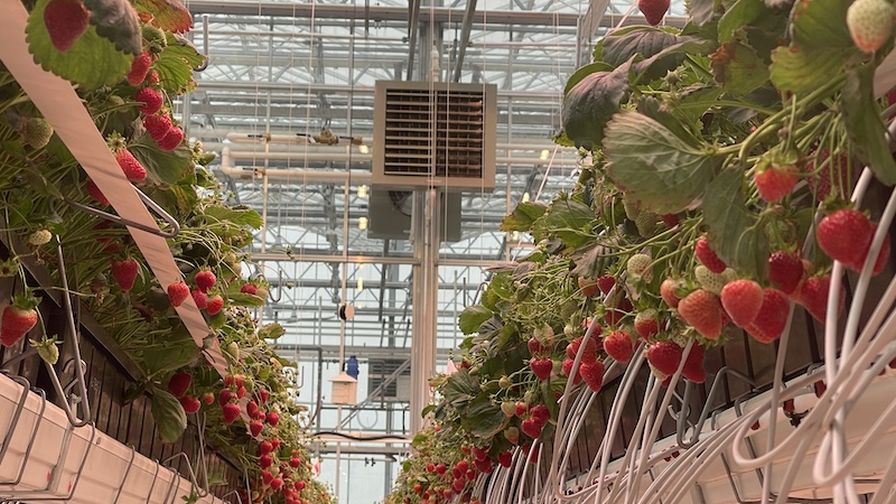
Energy-efficient lighting, especially LED systems, is a major area of innovation. Lopez’s work, often funded by federal grants, explores how manipulating daily temperature swings can boost strawberry flavor and aroma, using controlled day and night cycles to coax the best sweetness out of everbearing varieties.
Everbearing strawberries, he explains, hold particular promise in northern climates: “They flower and taste sweeter in cooler temperatures. Michigan’s greenhouse off-season is the perfect time,” he says. The ‘Albion’ variety dominates the indoor strawberry industry for flavor but struggles with yield. Lopez’s research is changing that, experimenting with new cultivars and environmental controls to rewrite what growers expect from indoor harvests.
Teaching, Extension, and Student Engagement
Education is central to Lopez’s mission. His courses range from greenhouse structures and management to hydroponic food production. The latter evolved directly from student demand. “We grow tomatoes, cucumbers, peppers, strawberries, lettuce, and herbs,” he says. “Students get to grow a crop in the major hydroponic systems and learn what works.”
Scouting everything from insect pests to crop nutrition disorders, students will run taste tests and compare crops grown under LEDs versus traditional lighting, learning to discern fruit weight, shape, quality, and other subtle improvements made possible by technology and research. Lopez believes in field experience. On this particular Friday, he is taking his class on tours of West Michigan hydroponic greenhouses to see the industry firsthand.
Research That Meets Real Needs
Extension is about connection, and Lopez excels here. Beyond surveys and grower calls, he requests feedback to shape research questions and course design. “You have to convince the industry when change is needed,” he says. Floriculture growers are now exploring winter strawberry production in greenhouses otherwise left idle, which is a move that pairs market demand (such as schools seeking fresh strawberries) with smart resource use.
Lopez is a core team member on Electronic Grower Resources Online (e-GRO), a free, award-winning platform that disseminates weekly alerts, research findings,, and diagnostic resources to more than 4,000 growers on four continents. The collaborative effort spans 11 universities. “If growers face a new pest or challenge, we alert them before it spreads,” Lopez says. Annual diagnostic tours take students and growers to commercial greenhouses for hands-on learning.
Culinary Herbs and Food Safety
With a 2022 USDA Specialty Crop Research Initiative grant, Lopez leads a 10-university team studying indoor production of culinary herbs, a major opportunity given America’s reliance on imports. His lab investigates UV LED lighting to control growth and avoid leggy plants, while extension efforts tackle food safety, crop protection, and marketing challenges unique to greenhouse herbs. “Flower growers switching to herbs need new protocols; they can’t use the same pesticides, for instance, and they have to learn about contamination risk,” he says.
Organic production, once assumed to be a priority, is proving less urgent than simply finding reliable ways to grow good herbs indoors.
Energy, Impact, and Feeding Local Communities
Lopez remains realistic about CEA’s limits. “We’re not going to feed the world, since crops like corn and soybeans can’t be grown profitably indoors,” he says, “but CEA matters for leafy greens, herbs, and small fruits, especially where water, land, and climate threaten traditional farming.”
Managing energy costs and efficiency is the next big hurdle. Lopez and his colleagues aim to find breakthroughs that make CEA more accessible and sustainable.
Whether analyzing crop yields or teaching university students, Lopez says that curiosity fuels it all. “I want students to be as curious as I am,” he says. “Innovation comes from bringing industry and academia together, tweaking methods, tasting flavors and sharing what works.”
The winners of the CEAg Impact Awards will be announced and honored live on stage at the kickoff ceremony for the CEAg World Conference and Expo on Nov. 20, 2025, in Durham, N.C. To learn more and join us at the conference, visit CEAgWorld.com/events.