2025 Emerging Leader Finalist: Danielle Rose, Ceragen
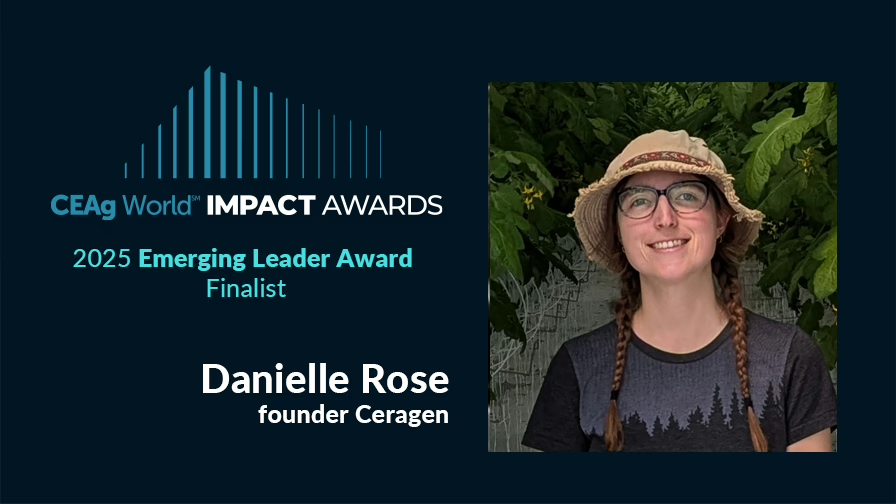
Danielle Rose is one of three finalists in the Emerging Leader category of the inaugural CEAg World Impact Awards.
 Danielle Rose, founder and CEO of Ceragen, is one of three finalists in the Emerging Leader category of the inaugural CEAg World Impact Awards. The Emerging Leader Award recognizes a rising talent in CEA who demonstrates exceptional promise and leadership with new solutions, strategic thinking, or leadership within their community or industry. This award recipient will be someone who drives change through the adoption of cutting-edge technologies and ideas that enhance productivity, sustainability, and efficiency, shaping the future of agriculture. Learn more about Rose below, and watch CEAgWorld.com for more profiles of our finalists.
Danielle Rose, the founder of Ceragen in Kitchener, Canada, is working to redefine plant health in CEA through microbiome innovation. She leads development of beneficial microbial inoculants—mixes of “good” bacteria or fungi that support plant health when added to growing systems—tailoring them for hydroponic crops to improve nutrient uptake, stress tolerance, and yields.
Rose earned her undergraduate degree in microbiology from University of Guelph in 2019. After a couple of years exploring different start-up ideas in microbiology and software, she landed on the concept of improving plant yield with microbial inoculants.
“I grew up in southern Ontario, where Leamington is a big greenhouse hotspot,” she says. “I started looking for opportunities for the use of beneficial microbes, fell down the CEA rabbit hole, and haven’t left since we started.”
Rose and her brother, Matthew, founded Ceragen in 2021 with the goal of bridging cutting-edge science with practical grower solutions. Her team developed a line of microbial inoculants that growers apply to the roots of their plants to help improve crop yields.
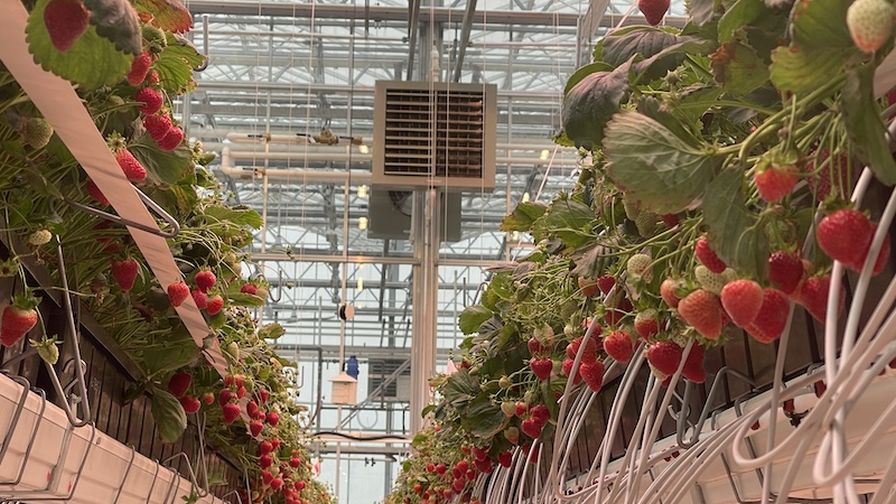

Ceragen started with small trials and scaled up to a 1.6-acre greenhouse for larger-scale inoculant trials. Through this demo greenhouse, the company sold and shipped 100,000 pounds of tomatoes via a large marketer.
Rose’s accomplishments have caught the attention of the scientific community and investors alike. She and her brother were named to Forbes’ 30 Under 30 list in the Science category in 2023. Last year, Rose raised $2 million to expand Ceragen, including funding from American venture capitalists and backing from the Canadian government.
Flexibility Is Key
Rose says one of the most important skills for leaders in the CEA space is flexibility. She demonstrated this in August, when much of Ceragen’s business shifted in response to grower needs.
She explains how her microbial inoculant customers were increasingly asking questions about disease testing. Hoping to leverage Ceragen’s expertise in microbiology, growers brought disease testing reports from other companies to Ceragen for help with interpreting the results.
Now, Ceragen is offering disease testing as a service.
The company has the ability to do DNA sequencing in-house, which shows the community profiles for bacteria and fungi. Using a technique called ITS and 16S amplicon sequencing, Ceragen can determine the relative abundances of each organism present in the sample.
Looking toward the future, Rose is focused on launching a grower portal for customers. “We want to bring a lot of bioinformatic tools that we use in-house when comparing samples and share them with the growers so they can dig in deeper if they want to,” Rose says. “We will still do summary reports, but we’re bringing the portal online so growers can compare samples from multiple treatments and see how they differed.”
With the pivot to disease testing and the introduction of a grower portal, Rose says Ceragen will become both a service provider and software company, while continuing to offer a microbial product line.
Education Moves the Industry Forward
Rose is especially proud of her work in CEA education and bridging knowledge gaps between microbiologists and growers. For example, she says, sometimes growers may attend a conference and listen to a presentation full of academic research and data. And while the information is valuable, the grower may be unsure of specific steps to take next to improve their business.
Rose likes to connect those dots. She has led in-person workshops hosted by the Ontario Greenhouse Vegetable Growers (OGVG) on hydroponic microbiomes and also plans to speak at upcoming conferences on sample handling to educate growers on best practices.
Because the CEA industry values relationships, Rose says, she knows she has to earn growers’ trust.
“They get up at 5 a.m. and work really hard,” she says., “They value honesty and a person’s word. The industry is very reputation- and relationship- based. People need to know that they can count on you.”
And that goes for the next generation, as well. Rose is very involved with the start-up scene in Waterloo, Canada, and she welcomes students from the University of Waterloo to participate in Ceragen’s paid co-op program. Students learn a diverse array of skills in the program, ranging from basic lab techniques to resume writing to networking. “We spend a lot of time finding the best ways to train students. Ceragen is getting really high-caliber talent, and they come back semester after semester to work with us,” Rose says.
The winners of the CEAg Impact Awards will be announced and honored live on stage at the kickoff ceremony for the CEAg World Conference and Expo on Nov. 20, 2025, in Durham, N.C. To learn more and join us at the conference, visit CEAgWorld.com/events.