Why Pluck’d Is Banking on American-Grown Greenhouse Tomatoes
 August 11, 2026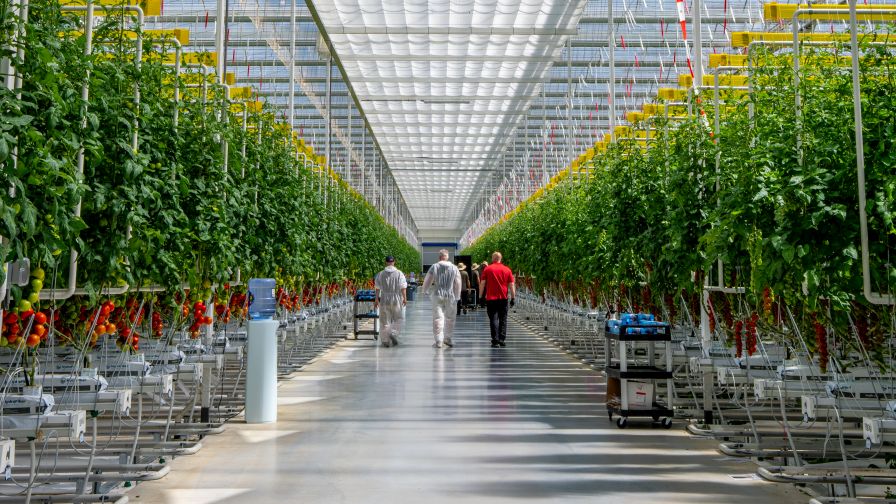
The grower is betting on its proximity to major U.S. metros and distribution centers as a key to winning consumers. “It’s fresher than imports,” says CEO Ben Alexander. “We can be picked today and in D.C. tomorrow.” | All images courtesy of Pluck’d
When Oasthouse Ventures, a U.K.-based developer and operator of low-carbon commercial greenhouse projects, set its sights on the U.S., the country was essentially a blank slate. Leadership felt there was a gap in the American market for high-quality, year-round tomatoes that could compete with Canadian and Mexican imports on flavor and freshness. And the East Coast, with a concentration of major metros for distribution, quickly emerged as Oasthouse’s best option for launching a greenhouse operation.
The new venture, Pluck’d, ultimately landed in Virginia—but not, according to the company’s CEO, before burning eight months on a misdirected site search.
“We got it all wrong,” says Ben Alexander, who served as senior development manager and project director for Oasthouse Ventures before taking the helm at Pluck’d. “We focused on gas and electricity rates, best taxes. But our senior grower and yield consultants looked at the locations and said, ‘You’re not going to do a good job there.’”
The sites they’d identified were too hot, too cold, too humid … or something else that would affect bees and pollination in a substandard way while also impacting energy costs, disease management, yield, etc. So they started again, building in-house software to analyze a half-billion data points from every weather station east of the Mississippi, looking for what Alexander calls a “Goldilocks zone.”
“We reverse-engineered the site selection process based on the optimal climate for growing tomatoes,” he says.



The Sweet Spot
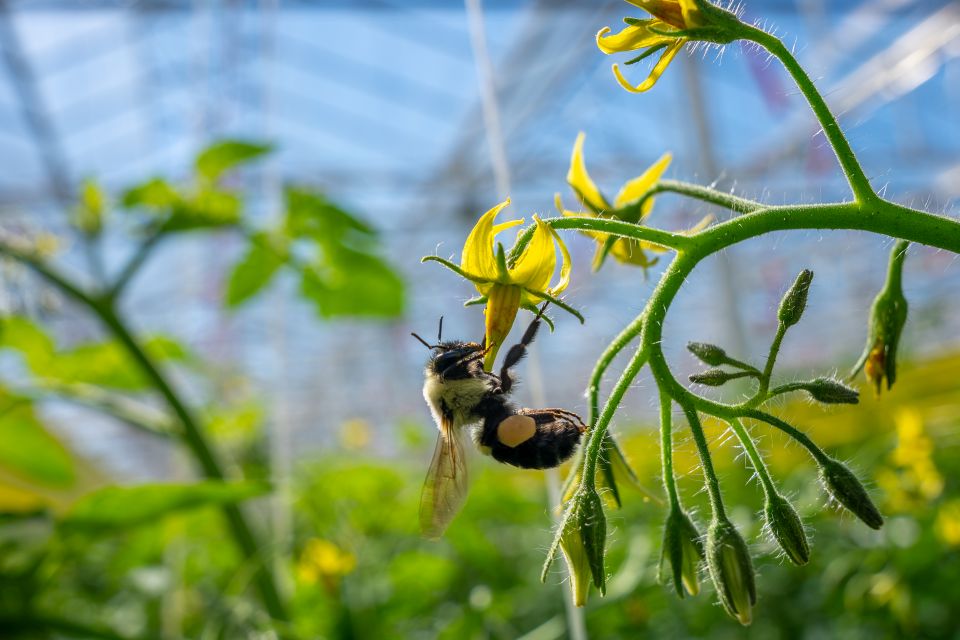
Climate is critical to pollination efforts, says Alexander, and the company’s research deemed the Virginia site to be the “Goldilocks zone of optimum pollination” for tomatoes.
After multiple site visits, Alexander secured land in Austinville, Va. A key criterion that made Austinville just right, according to Senior Grower Nic de Jong: “It’s the altitude. We’re at 800 meters high [2,625 feet], and that means in summer we don’t have very hot days and the nights are really cool. We have a lot of sun hours.
“I saw the data a year ago, and I was a little surprised, but I can see it with my own eyes now,” he adds. “I grew tomatoes in the Netherlands for 35 years, but we can grow faster and earlier in the season here.”
Rather than chasing bulk tomato categories, Pluck’d has built its lineup around high-value greenhouse segments—cluster, cocktail, and snacking tomatoes, all on the vine (TOV)—where flavor, consistency, and branding can command a premium. This specialization in smaller TOV, Alexander says, is counter to other U.S. offerings. “We’ve chosen to go for high quality but lower yield. There’s always a balance between yield and quality.”
Low-Carbon, Sustainable Production Plans
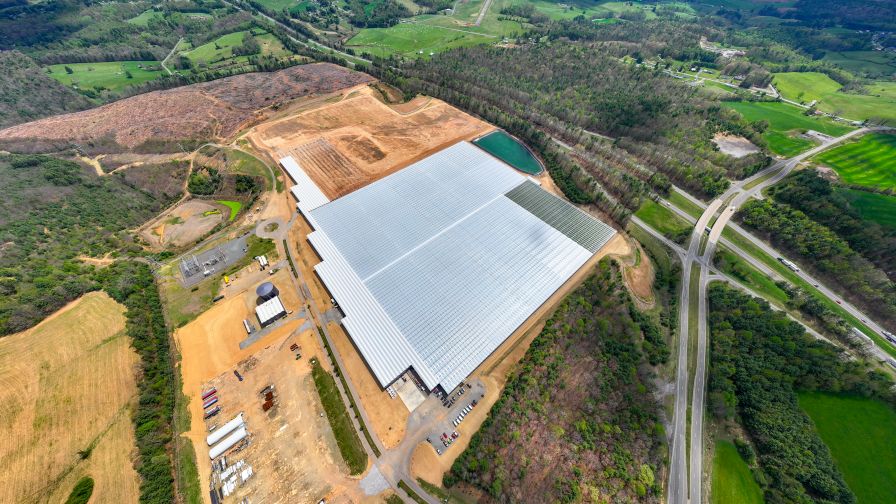
The Austinville, Va.-based Pluck’d currently provides tomatoes to select stores across the Eastern U.S., all grown in a 13.5-hectare Dutch-style greenhouse. A second, equal-sized greenhouse is expected to be producing in 2027.
Pluck’d currently operates one 13-hectare, high-performance Dutch-style greenhouse from Dalsem, with plans in place for a second one that size to start producing in 2027. Alexander notes that the operation features “extremely high-end” irrigation systems and filtration units, as well as a full suite of AI and sensors, predictive analytics on yield, and sophisticated integrated pest management.
Oasthouse Ventures built its reputation in Britain around low-carbon farming, including greenhouse systems that capture waste heat and CO2 streams from adjacent industrial sites to supply up to 90 percent of heating needs. Pluck’d aims to continue that legacy in the U.S.
Alexander is eager to implement a biomass heating system—early reports discussed the potential to source more than 30,000 tons of Virginia hardwood residuals—but the project is not there yet.
“It’s a plethora of reasons,” he says. “A lot of this technology doesn’t exist in America, and we wanted to get started with growing. But we’ll get it done.”
Made in the U.S.A
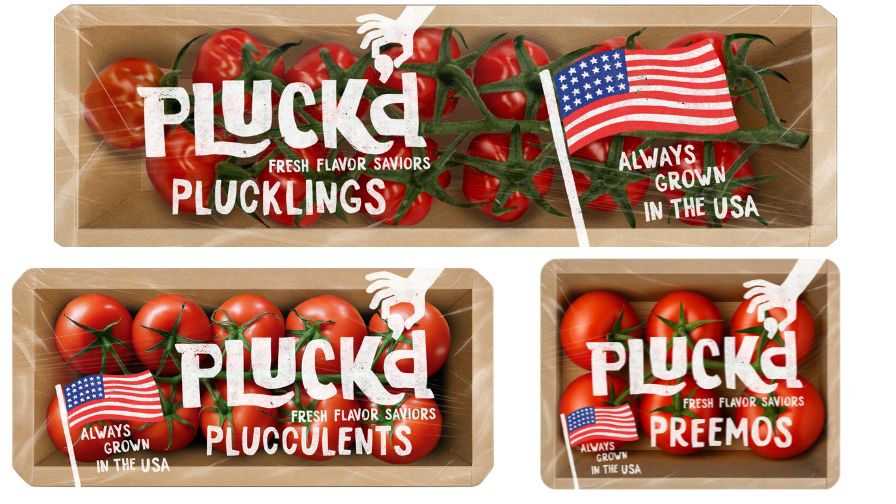
The Pluck’d TOV varieties are bred to prioritize flavor, while the packaging trumpets their U.S. provenance.
This grand-scale, vertically integrated tomato operation is custom-wrapped in a “made in America” marketing strategy, including playful product names (Preemos, Plucculents, and Plucklings) and a social media campaign titled “Pluck Around and Find Out.”
The goal is to stand out in the grocery produce section, as well, with a very clear message. Pluck’d created its own highly sustainable, paper-based packaging and emblazoned it with American flag imagery and the words “always grown in the USA.”
“I don’t think American consumers realize just how many of the tomatoes they consume are from Mexico and Canada,” says Andrew Shields, director of marketing. “We’ve got something that’s American-grown and tastes like nothing you’ve had before. That’s how we want to differentiate ourselves.”
Phase 2 and Beyond
Pluck’d launched its first products in mid-April 2026, which are available at select Walmart stores, Weis Markets, and other regional retailers served via distribution centers across the Mid-Atlantic region. If early sales meet expectations, Alexander says, “We’ve got a huge pipeline of additional sites that we’re ready to start developing.”
For tomatoes, that likely means Virginia, he confirms. “For other crops, then we’ll use our software and follow the climate and the data. For now, we’re focusing on high-wire crops.”
Editor’s note: This article was originally published in our 2026 Industry Report: Greenhouse Produce.