CEA Enters a More Disciplined Era, New Global Census Shows
 March 12, 2026
The latest Global CEA Census demonstrates that the sector is entering a more pragmatic and durable phase after several years of investment volatility and industry shakeouts. In a recent comprehensive analysis, Agritecture founder Henry Gordon-Smith examines what six years of Census data reveal about how the industry is evolving.
The Census, launched by Agritecture in 2019 and co-produced by CEAg World for the past two cycles, captures comparative data spanning the effects of the COVID pandemic, the CEA investment boom and hype cycle, and the subsequent contraction of capital.
“[This] is the first edition published on the other side of that correction,” Gordon-Smith says. “What it shows isn’t a failed industry. It shows an industry that has finally started telling the truth to itself — and in doing so, is building something more durable than what came before.”
Drawing responses from more than 470 farms, suppliers, researchers, and investors across 57 countries, the 2025 census reveals that nearly two-thirds of farms still plan to expand. Gordon-Smith notes, however, that expansion confidence has dropped from about 90% in 2019 to roughly 67% today, reflecting a more cautious and disciplined outlook among operators.
Profitability Signals a Stronger Foundation
One of the most notable findings: 56% of indoor growers now report being profitable — but this number deserves critical reading, Gordon-Smith says. According to the Census analysis, he explains, this figure reflects businesses that survived a difficult market environment and refined their operational strategies under real economic pressure.



Profitability is also closely linked to sales channels.
“This is the finding I most want operators and investors to sit with: The 2025 data shows more clearly than any previous edition that what you grow matters, but how you sell it matters more,” Gordon-Smith says.
Farms selling through wholesale and B2B distribution networks report the highest success rates, while direct-to-consumer models show lower profitability overall. Crop selection also matters. Microgreens currently lead in high-margin production, while leafy greens — once the dominant crop category — show greater volatility as markets become more saturated.
Greenhouses Dominate the CEA Landscape
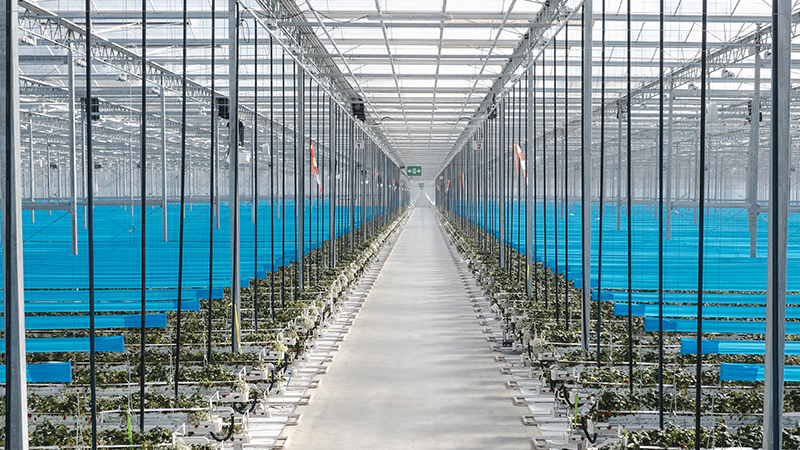
Gordon-Smith points out that the Census data reinforces a long-standing industry reality: Greenhouse production remains the backbone of commercial CEA. Greenhouses significantly outnumber vertical farms among respondents and continue to demonstrate lower construction costs, lower operating expenses, and more established profitability across global markets.
Meanwhile, vertical farms still show strong expansion intent, particularly among operators pursuing premium crops or specialized urban markets.
Energy, Labor, and Technology Shape the Next Phase
Energy and labor remain the sector’s most persistent cost pressures, cited by 47% and 46% of respondents, respectively. Increasingly, growers are responding by adopting energy-efficient equipment, monitoring tools, and renewable energy solutions.
“In 2024, the predominant posture on energy was aspiration,” Gordon-Smith says. “Most respondents were ‘considering’ renewables for the future. In 2025, the pivot has happened. Nearly 57% are running energy-efficient equipment, 30% are using monitoring and analytics tools to track consumption, and 24% have invested in on-site renewables. The industry has moved from talking about energy management to actually doing it.”
Technology adoption is also accelerating, Gordon-Smith reports. About 37% of farms already use AI in some form, largely embedded in climate and fertigation equipment, though many growers want greater transparency and control over how those systems operate.
What the Data Suggests for the Future
Gordon-Smith’s analysis is worth the full read for more nuanced insights, and you can find it here. For growers, investors, and industry stakeholders, the full dataset offers even deeper insight into where controlled environment agriculture is heading next. Download the full 2025 Global CEA Census for free at: CEAgWorld.com/census.