Forever Young Aquaponics Farm Launches with Big Goals
 June 18, 2026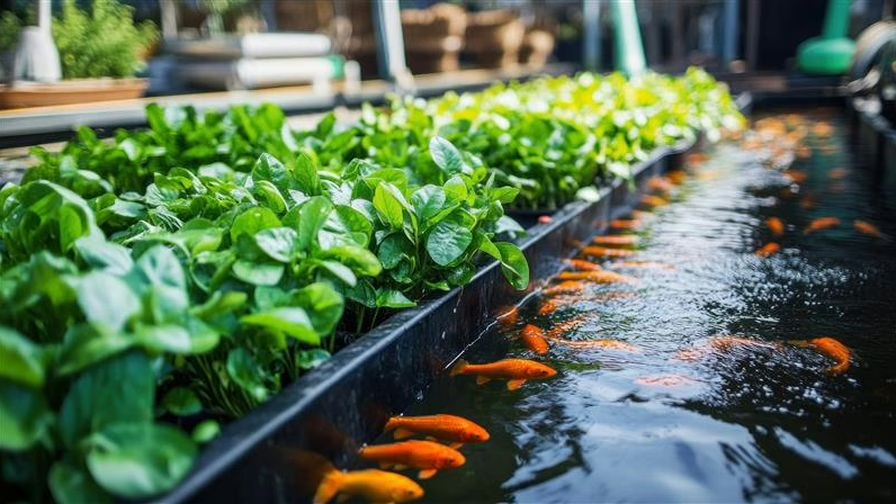
A cyclical nature loop of aquaponics. | Photo: Adobe Stock
Forever Young Aquaponics Farm, a large-scale CEA project near the Hartsfield-Jackson Atlanta International Airport, has opened for business as of June 2, 2026. The project was developed through a collaboration involving Forever Young Aquaponics, Water Farmers, Inc., the Andrew J. Young Foundation, and Geist Family Investments, as a proof-of-concept for scalable and sustainable aquaponic food production, as reported by Pond & Company, the lead architect.
The project combines aquaculture and hydroponic crop production in a closed-loop system where fish produce nutrient-rich waste that is used as plant fertilizer, while the plants purify and recirculate water back to the fish tanks. According to the team, the facility design is capable of seven to eight times the yield density compared to traditional farming while reducing water use by up to 92% and lowering carbon emissions by approximately 50%.
Designing a First-of-Its-Kind Aquaponics Facility
The project developers faced challenges in integrating the needed production systems and infrastructure required for both agricultural production and commercial operations, along with aligning the build with zoning classifications and other regulatory hurdles.
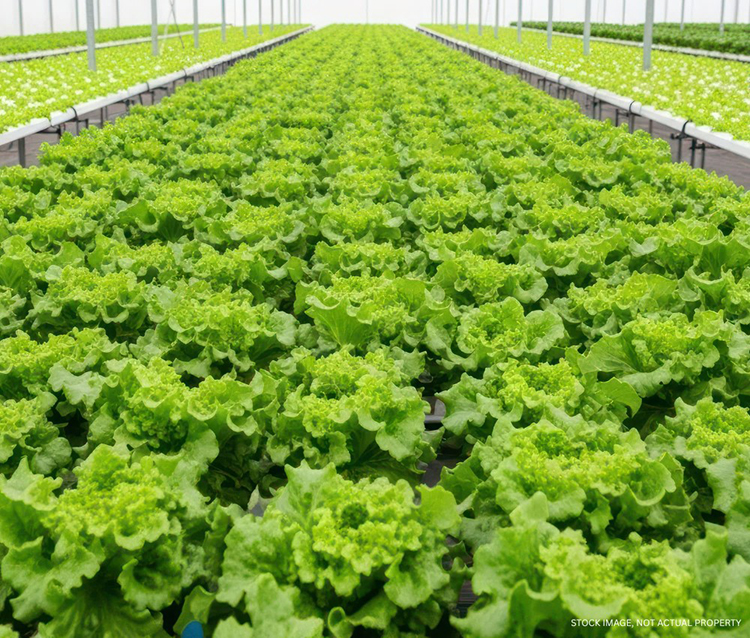
The (current) Phase 1 facility is composed of an operational head house, a greenhouse dedicated to crop production, and a fish house that enables water circulation and filtration, all of which are within an integrated network. Already operational, the facility is producing an estimated 15,000 pounds of leafy greens per week. Additionally, a partnership with Delta Air Lines has found an outlet for the produce, feeding members of Delta Sky Clubs and in-flight services, forging a direct link from local food production to a global transportation hub.


Phase 2, now in planning, will replicate the initial Phase 1 design, essentially doubling its leafy green production capacity while also incorporating lessons learned from the initial build to more effectively scale the model.
For additional information on the Forever Young Aquaponics Farm, including its community impact and educational opportunities, please read the original article found on the Pond website.