Greenhouse Modernization: 4 Tips from Michigan State University

Photo: Pavel, via Adobe Stock
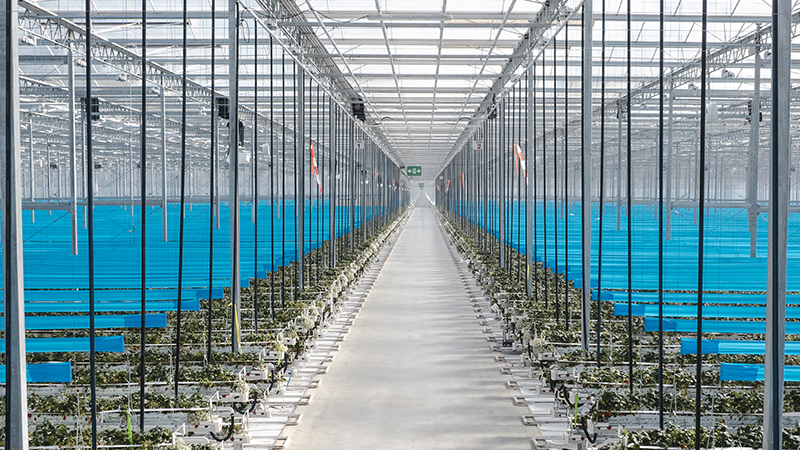
At Michigan State University’s Plant Science Research Greenhouses, a phased $35+ million renovation and new build project is underway, a model for how long-term strategic thinking drives better outcomes for complex greenhouse operations.
More than 400 researchers rely on these facilities for everything from basic plant science to applied agriculture studies, with at least 100 different projects happening at any one time; all of Michigan’s commodity crops are represented within the facilities. Success here means balancing diverse operational needs, future-proofing infrastructure, and managing budgets, all while maintaining active research production.
At the helm of this project is Chrislyn Particka, who is the Greenhouse Director of the research greenhouses. When she joined the institution in 2019, she inherited aging infrastructure, inconsistent environmental controls, and more than 60 faculty users whose research needs were not always being met due to the condition of the greenhouses.
In fact, just a few weeks into her tenure, she received an initial assessment of the facility. The report contained suggestions on how to renovate each greenhouse; there were no plans to tear down and rebuild any. Over time, however, Patricka and her colleagues were able to offer their ideas on how the plan could be adjusted to include tearing down and rebuilding the greenhouses, as some of the shortcomings of the greenhouses that limited research capability could not be corrected with renovations. “Luckily, we were eventually able to dream bigger,” Patricka says.
Over the next five years, she would lead the transformation of one of the nation’s most complex research greenhouse facilities, all while keeping operations running, with a lot of help from the other greenhouse staff members. Here’s what she learned:



1. Understanding the Unique Needs of Research Greenhouses
Unlike commercial greenhouses, research facilities like MSU’s serve dozens of different users simultaneously, who have a wide variety of needs. Tree research needs tall space, for example, while pathology studies need precise environmental control to encourage disease development.
At Michigan State University, 60-70 faculty members are active in the facilities at any time, spanning eight academic departments across three Colleges (Agriculture and Natural Resources, Natural Science, and Engineering). The variety of research conducted includes crop breeding, herbicide resistance in weeds, how plants respond to and tolerate environmental stress, and the development of photovoltaic glass and evaluating plant growth under it.
Lesson Learned:
Design with compartmentalization first. Separate, individually controlled zones are essential. Operators should plan for isolated airflow, independent lighting, and autonomous environmental control systems to protect research integrity across a facility.
2. Recognizing the High Cost of Aging Infrastructure
Prior to renovation, many greenhouses had no computerized environmental controls, just independent thermostats triggering fans or heaters individually. Furthermore, 24-hour flat temperature setpoints were the norm — no day/night variation.
Vents were sometimes open while the heat was on, wasting energy and destabilizing the crop environment. Leaky or undersized evaporative cooling pads severely limited summer operation.
This issue at that point was that inconsistent temperatures created uneven crop development, even in research.
Lesson Learned:
Operators must eliminate multiple, isolated control points that “fight” each other. Invest early in centralized environmental controls, even simple programmable logic controllers (PLCs), to avoid this slow operational death spiral.
Install temperature and equipment overlay reporting: overlay vent status, fan speeds, and temperature readings to quickly diagnose system mismatches.
For the remaining two tips, read the full article on GreenhouseGrower.com.