Know Your Pests: A Guide for Hydroponic Growers
 June 19, 2026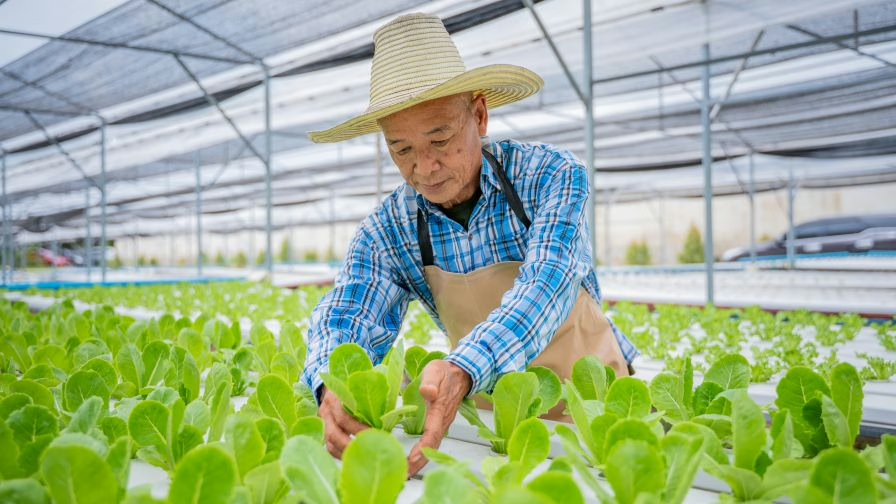
Photo: Lungkhaek via Adobe Stock
According to a recent guide from Grow With Hydroponics, many hydroponics crop losses are caused by common greenhouse and indoor farming pests, which leave behind damage and symptoms that often mirror those of nutrient deficiencies, plant stress, or root diseases. Therefore, accurate and early hydroponic pest identification is critical to ensuring the success of modern CEA systems.
The Challenges of Identifying Hydroponic Pests
Hydroponics systems are often circular, meaning everything is connected. This has many production benefits, such as energy efficiency, but that makes it difficult to establish a root cause or patient zero when a disease, nutrient, or pest problem occurs. Additionally, unlike with outdoor crops, there is no seasonal reset where the plants (and any pest problems they might have) die in the winter. Instead, indoor hydroponics systems run year-round, allowing pest populations to continuously build and spread.
Five Pests Every Hydroponic Grower Should Know
The guide identifies spider mites, aphids, thrips, fungus gnats, and whiteflies as the most damaging pests commonly found in hydroponic systems, with each pest leaving telltale signs to help growers distinguish their presence from nutrient and environmental problems.
- Spider mites leave behind fine, silky webbing and stippled (tiny pinprick dots) damage on leaves.
- Aphids coat leaves and growing surfaces with honeydew that promotes mold growth.
- Thrips produce silver and brown streaks on their feeding locations and leave behind black fecal deposits.
- Fungus gnats damage root systems and target moist growing media substrates.
- Whiteflies congregate in clouds at canopy level and produce yellow stippling (similar to thrips) and honeydew deposits (like aphids).
Prevention Checklist for Hydroponic Growers
As in most controlled environments, proactive scouting is far more effective than reactive treatments once the damage has been done. The guide outlines the following checklist:
- Quarantine all new plants for at least 14 days before system introduction.
- Sterilize reservoirs, pipes, channels, and growing containers between every crop cycle.
- Install insect screening (50 mesh or finer) on all air inlets and exhaust fans.
- Keep nutrient solution temperature at 65–68°F.
- Maintain dissolved oxygen above 7 ppm using air stones or venturi diffusers.
- Scout twice weekly; document and log results.
- Run yellow and blue sticky traps continuously; count and replace weekly.
- Avoid prolonged high nitrogen feeds—it increases plant susceptibility to sap-sucking pests.
- Rotate neem oil, insecticidal soap, and biological inputs—never rely on one method repeatedly.
For more information on hydroponic pest identification, including how to better read pest damage patterns and common pitfalls to avoid, you can read the full guide from Grow With Hydroponics online.