Research Brief: A Heads-Up on Plant Stress
 January 6, 2026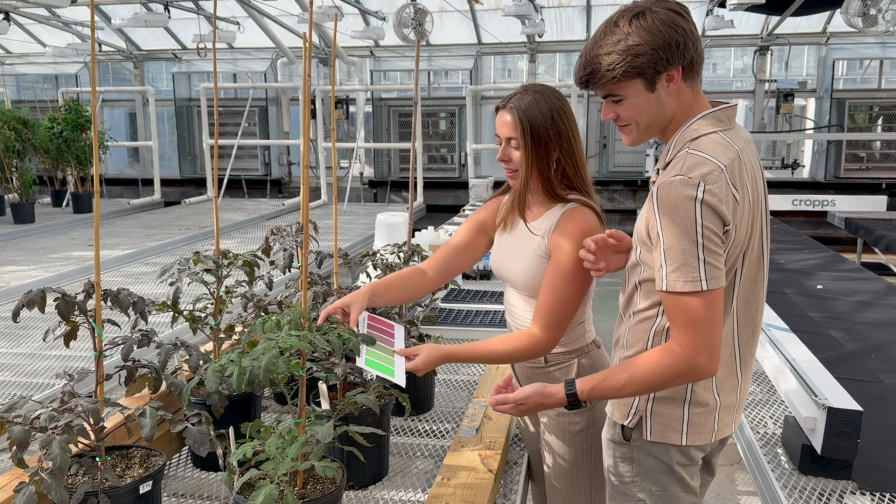
Two Cornell students created RedAlert Living Sensors, which are sentinel plants that indicate stress symptoms by changing color. | Photo courtesy of Cornell University
Ava Forystek and Jacob Belding, two students at Cornell University, made headlines in September when their ag invention was named a finalist in the national Collegiate Inventors Competition. Combining Belding’s knowledge as a chemical engineer with Forystek’s experience as an agriculture major, the pair created RedAlert Living Sensors, which are sentinel plants that indicate stress symptoms by changing color. This gives growers a visible sign that nitrogen levels are too low in their growing medium and allows them to take action before it’s too late to salvage their plants.
“The plant will tell you when it’s out of nitrogen in the root zone by turning from green to red,” Forystek says. “The plant isn’t quite starving yet, but growers should add more nitrogen before it reaches that point.”
The sentinel plants take nitrogen hunger signals from the root of the plant and pass them through the stem and leaves, changing from green to red to indicate nitrogen levels. “The amount of redness produced corresponds with how strong the hunger signal is,” Forystek explains.
In their experiment, Belding and Forystek used one-gallon deep-water culture (DWC) buckets with an air bubble generator attached. “With a small system, I can easily maintain the levels in my nutrient solution,” he says. “The only thing I change is the nitrogen levels and I can measure the plant’s response from that.”
In addition to helping growers prevent plant stress and reduce nitrogen waste, the sensors also make nitrogen testing faster and more accessible.

“Other methods of nitrogen testing have growers ship plant samples within the U.S. or overseas to get a nutrient analysis,” Forystek says. “This gives you a preventive measure of knowing exactly where and when to apply more nutrient solution.”
The technology is still in its early stages of development, but once Belding graduates from Cornell next spring, he and Forystek are considering launching an ag tech startup.
“It all depends on what the funding situation looks like,” Belding says. “But I could see us partnering with commercial growers and doing scale trials within the next couple of years.”
Editor’s note: This article was originally published in our 2025 Industry Report: State of the CEA Industry.