2025 Educator/Researcher Finalist: Ricardo Hernandez
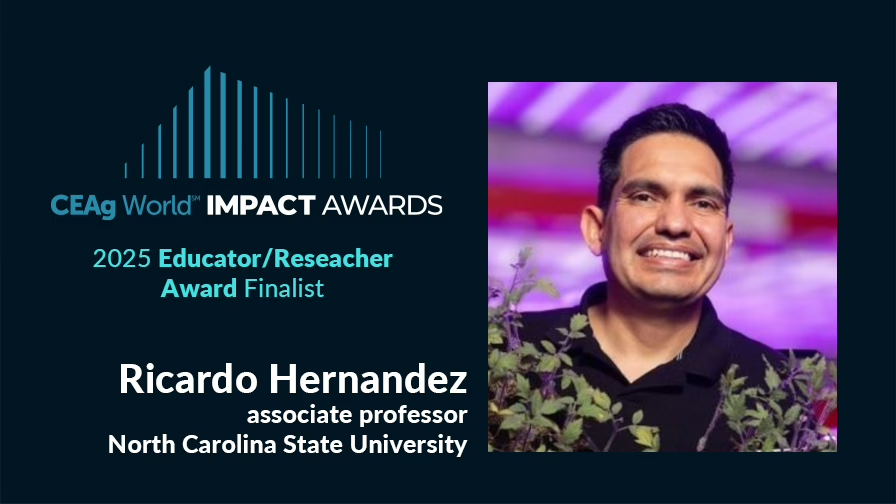
Ricardo Hernandez is one of three finalists in the Educator/Researcher category of the inaugural CEAg World Impact Awards.
 Ricardo Hernandez, Ph.D., associate professor, North Carolina State University, is a finalist in the Educator/Researcher category of the inaugural CEAg World Impact Awards. The Educator/Researcher Award spotlights an individual whose outstanding contributions have advanced CEA methods through research, education, and outreach. This individual demonstrates leadership, fosters collaboration, and shares insights that enhance CEA practices, sustainability, and productivity, while exemplifying innovation, professionalism, stewardship, and a lasting impact on the CEA industry. Nominee must be employed with a college, university, or research facility.
Learn more about Dr. Hernandez below, and watch CEAgWorld.com for more profiles of our finalists.
In Ricardo Hernandez’s research world, the story begins at the greenhouse.
“We start with growers, not with hypotheses,” he says, describing how his job as an associate professor at N.C. State University and director and creator of the Controlled Environment Agriculture Coalition lies as much in conversation with producers as in years of scholarly training.
Practical problems spark the experiments in Dr. Hernandez’ CEA lab.
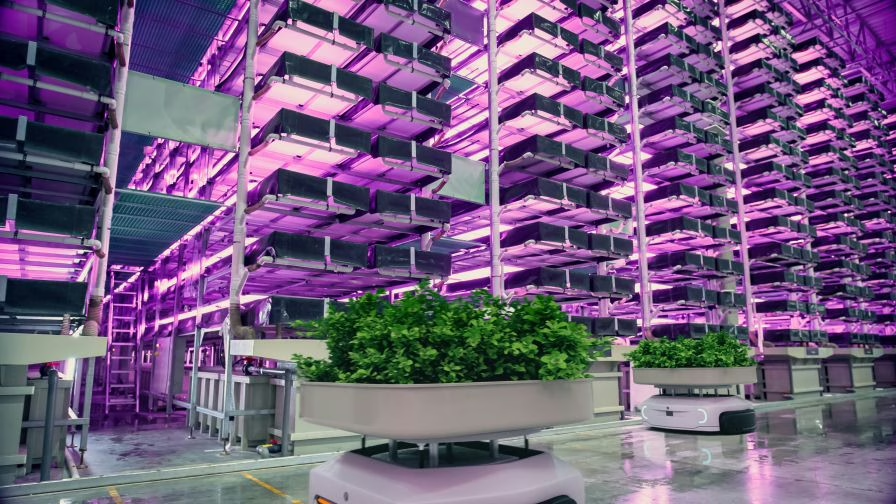
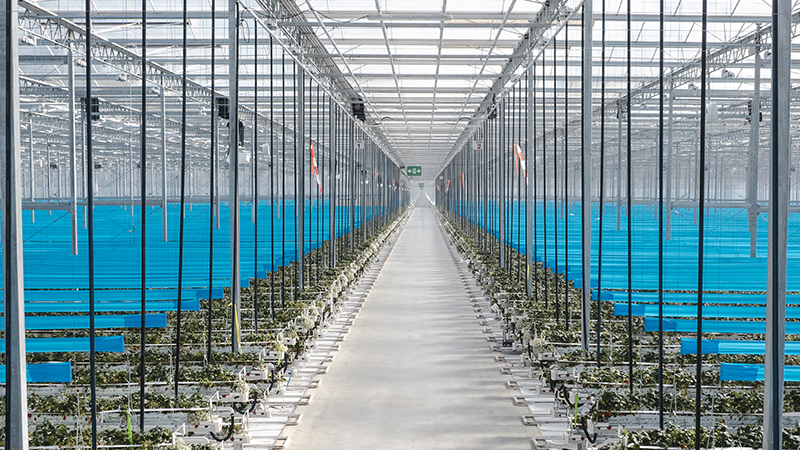
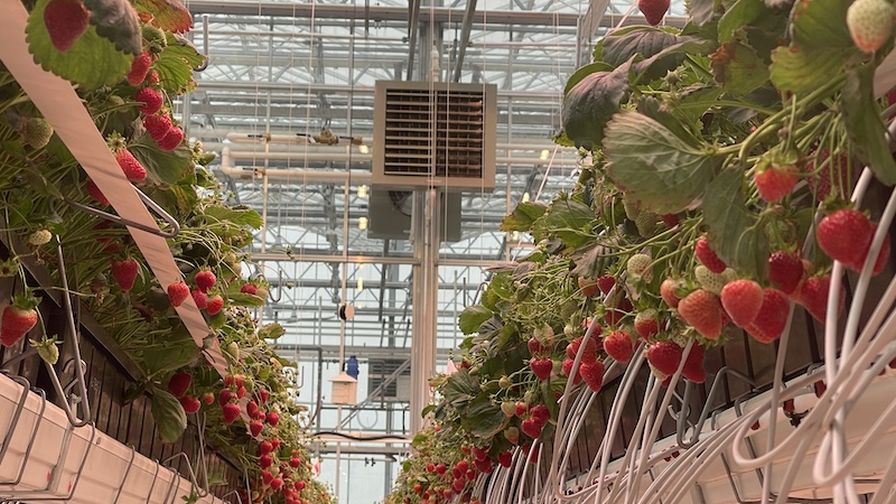
His work is defined by translation of research as well as value to the field. New technology or data, he stresses, “means little unless it delivers for growers.” His team’s approach zeroes in on real-world breakthroughs in three specific areas:
- Better propagation in CEA: This research creates recipes for nurturing healthy young plants in controlled conditions, with subtle tweaks to light, airflow, and climate, aimed at the kind of practical improvement a commercial facility can quickly adopt. He’s helped develop propagation “recipes” that have been adopted in multiple commercial settings. “The true excitement is when something we test in the lab turns into value,” he says. “It’s about the moment when they actually use a method and not just read about it.”
- Speed breeding: This enables breeders to fast-forward genetic gains, making short work of what was once a slow, season-by-season grind. By adjusting environments, his lab shortens flowering cycles to help breeders maximize new trait integration into horticultural, agronomic, and forestry crops.
- Agrivoltaics Innovation: By harnessing advanced optics, Dr. Hernandez’s group splits sunlight, allowing crops to soak up energies perfect for growth while the rest of the spectrum is channeled into clean power. “The No. 1 priority is still maximizing crop yield, but if we can help a farm remain viable with revenue from solar energy, that’s a win for agriculture and sustainability,” he says. His team’s projects include advanced prototype testing in the field with new solar panel designs.
Building a Network for Shared Success
Research doesn’t happen in isolation. As director and founder of N.C. State’s Controlled Environment Agriculture Coalition, Dr. Hernandez has pioneered a model in which research questions and funding originate from a group of current grower and industry members. The group collaborates to set priorities and ensures quick adoption for discoveries; these are projects “that matter now versus maybe or someday.”
In just three years, his consortium has launched industry-funded trials and “mini-grants” enabling everything from AI-powered plant stress sensors to environmental airflow modeling, drawing on faculty from rocket science to horticulture for outside-the-box solutions. “Each year, the coalition grows stronger as more growers join, which is proof that this collaborative, industry-driven model delivers results,” he says.
From City Curiosity to Academic Impact
Hernandez’s own path began far from traditional agriculture. Growing up in Mexico, he didn’t learn about plants or farming in the fields.
He started as a mechanical engineering student, then pivoted to agronomy “with no idea what a weed looked like,” as he puts it. It was only when his favorite class turned out to be entomology that agriculture finally clicked, leading him from pest management to his doctoral work on plants and light. His passion for controlled environmental systems was first sparked as a University of Arizona Ph.D. student working with pioneering LED light research, a field that has since become pivotal to the CEA world.
“I was the outsider who fell in love with what I didn’t know,” he says. “Now, every day, it’s about bringing that new energy to a field I care about.”
The Future Is Bright
Students walk into Dr. Hernandez’s courses expecting lessons on controlled environment systems but leave with perspectives shaped by teamwork and creativity. “I want them using new tools, including AI, to unlock what critical and creative thinking can do together,” he says. His classes mix lifelong farm kids with tech-first learners; what unites them is a real-world focus.
“From day one, I encourage students to use any artificial intelligence tools they can access, not just to get answers, but to generate better questions. Creative thinking comes first, because the future of agriculture will always belong to those who shape new ideas into reality.”
Innovation, Hernandez believes, comes not from grand theories but from tackling what’s broken today and equipping a new generation to see possibility where others see routine. “When growers, researchers, and students dream and build together, we all benefit.”
For Hernandez, that philosophy is more than a method. It’s why he’ll always be knocking on greenhouse doors before drawing up his next experiment.
The winners of the CEAg Impact Awards will be announced and honored live on stage at the kickoff ceremony for the CEAg World Conference and Expo on Nov. 20, 2025, in Durham, N.C. To learn more and join us at the conference (growers attend free if registered by Oct. 31), visit CEAgWorld.com/events.