On Fertile Ground: Tips for Improving Soil Health
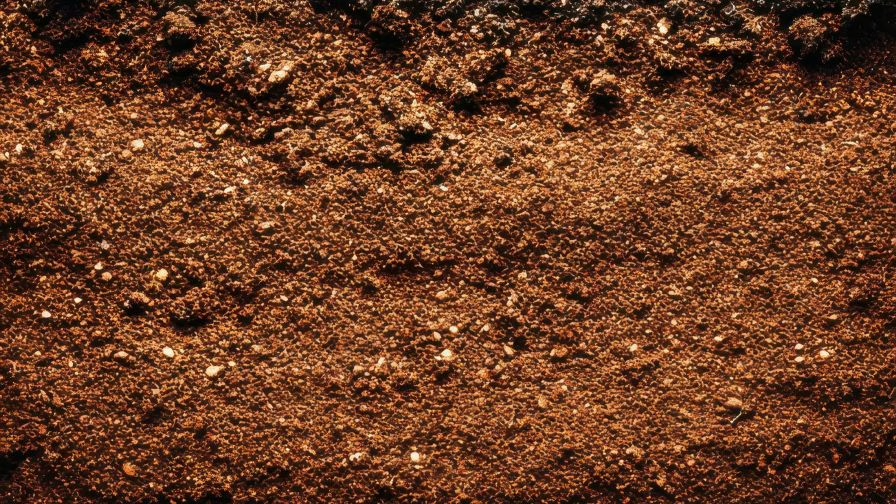
Industry experts say proactive management and thoughtful inputs are essential for preserving soil health and vitality. | Photo courtesy of Adobe Stock
High tunnel production offers growers a longer season, increased control over crop quality, and protection from weather extremes. But while the cover overhead can guard against harsh elements, what happens beneath the ground demands equal attention.
Maintaining soil health in these protected systems is critical for growers to optimize yields and long-term sustainability. Soil degradation, salt buildup, compaction, and nutrient imbalances can all become recurring problems in high tunnel environments. Experts say proactive management and thoughtful inputs are essential for preserving soil vitality.
Balancing Fertility for Strong Soils
In high tunnel systems, there’s often a temptation to fertilize heavily to push yield. But this can damage microbial populations and upset nutrient balances.
Fertilizers—both compost and synthetic versions—are often overapplied or contain non-target nutrients, leading to nutrient imbalances that impact yields, explains Judson Reid, extension vegetable specialist, Cornell Cooperative Extension.
While compost is good, overapplication can increase pH as well as phosphorous in the soil over time. “Over half of the tunnels we tested have soil pH higher than 7.0, while the optimal pH range for most crops is between 5.5 and 6.5,” he says. “Outside of this range, nutrients become less available to the crop and can lead to deficiencies.”


The solution here is found in one of the most underutilized grower tools: a soil test. A soil test typically costs between $40 and $50, including analysis and interpretation — an investment that often pays for itself in fertilizer savings, says Petrus Langenhoven, clinical assistant professor, horticulture and landscape architecture, Purdue University. “If you analyze your soil, you can apply only what you need for your crop,” he notes.
The practice is catching on: In a recent Purdue survey of 500 Indiana vegetable farms, around 60% reported testing their soils, a noticeable increase from a similar survey conducted in 2016.
“If pH is higher than 6.5 or seems to be rising over time, consider mitigation efforts,” Reid adds.
Avoiding High Soil Salinity
Another common challenge in high tunnel environments is rising soil salinity, which can lead to higher soil pH levels over time. Without the benefit of natural leaching from rainfall, salts from fertilizers or irrigation water can accumulate in the soil, eventually stunting plant growth. Left unchecked, these effects compound over multiple growing seasons, diminishing both crop health and yield potential.
While drip irrigation is efficient at delivering water directly to plant roots and conserving resources, it can also contribute more to soil salinity than overhead irrigation, which disperses water more broadly, says Langenhoven.
The best way to manage elevated soil salinity is to flush that salt out of the soil. For instance, Langenhoven suggests, “Try taking the high tunnel cover off in fall and letting the winter rain and snow fall on the soil and leach out some of that salt.”
According to the USDA Economic Research Service, more than half of all irrigation water applied on U.S. farms is from surface water, while the remainder is obtained from groundwater sources like wells. Well water can often increase soil salinity more than surface water, especially in arid or semi-arid regions where groundwater is naturally high in dissolved salts. Well water can also contain excessive iron. Growers can add sulfuric acid, nitric acid, or citric acid to the water prior to irrigation to help counter this, Langenhoven advises.
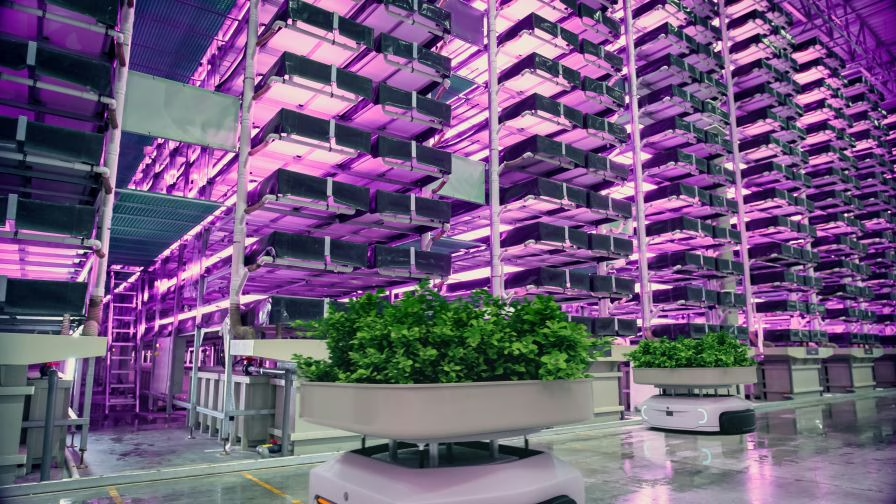
Transitioning to above-ground growing strategies using hydroponic systems can also help reduce issues related to high soil salinity. This can be helpful, especially in drought-prone areas, because it reduces overall water usage by up to 90% while maintaining yields, says Toby Longstreet, business development manager for Pelemix, Sun Gro Horticulture. “Overall, growers see significantly lower water and fertilizer costs per kilogram of produce in container systems,” he says.
Fighting Soil Compaction
Soil compaction from frequent foot traffic is another concern in high tunnels, often resulting in poor drainage and restricted root growth, according to Langenhoven. Use a broad fork or small tractor to break up the soil annually, he advises.
Another way to break up soil compaction is planting a cover crop with a long root system, such as daikon radishes, in fall. “Cover crops are underutilized in high tunnels, mostly due to time constraints and intensive production schedules,” Langenhoven says. “But even short-duration cover crops can benefit the soil if worked in before planting the next crop.”
Managing Soilborne Diseases
In the high tunnel environment, soilborne diseases can quickly become persistent if farmers neglect soil health. Langenhoven points to Fusarium and Pythium as key concerns in tunnels, particularly in crops like tomatoes, peppers, and cucumbers.
“Once a pathogen is in your soil, it’s hard to get rid of it without crop rotation since some plant families will cultivate the same diseases,” he says.
Poor drainage is another major contributor to soilborne diseases. To avoid waterlogged conditions, Langenhoven recommends placing the tunnel on well-drained ground, steering clear of valleys, and grading the surrounding soil so water flows away from the structure.
Taking the Long View
Healthy soil is not just about the current season; it’s about setting up the next one for success. The long-term investment in soil pays off in fewer disease problems, better crop quality, and lower input needs.
“High tunnels are intensive systems,” Langenhoven says. “But they don’t have to burn out your soil. You just have to treat that space like the valuable real estate it is and take care of what’s below the surface.”
Editor’s note: This article was originally published in the CEAg World Industry Report: Protected Crops.