Smart Controls Show Significant Energy-Saving Potential in CEA Systems, New Report Finds
 April 8, 2026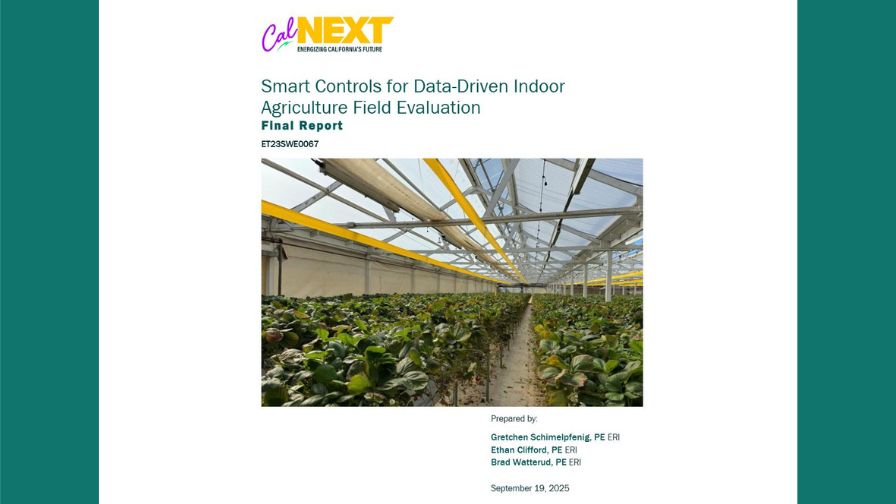
"Smart Controls for Data-Driven Indoor Agriculture Field Evaluation." | CalNEXT, Energy Transition Coordinating Council
A new report called “Smart Controls for Data-Driven Indoor Agriculture Field Evaluation,” authored by Gretchen Schimelpfenig, Ethan Clifford, and Brad Watterud of Energy Resources Integration, examines the role of smart controls in CEA and their potential to reduce energy consumption across greenhouse and indoor farming systems. Conducted between 2023 and 2025, the study combines market analysis, grower surveys, site visits, and field demonstrations to assess how automation, integration, and data-driven technologies are being deployed in the sector.
The findings underscore the central role of energy in CEA operations. Process systems such as lighting, HVAC, and irrigation can account for a substantial share of operating costs (up to 60% in some facilities, according to the report), making them a primary target for efficiency improvements.
Measurable Energy Savings Across Core Systems
Field demonstrations included in the report point to significant energy-saving potential tied to specific control strategies. Automated daily light integral (DLI) controls in greenhouses were associated with electricity savings ranging from 53% to 78% across crops such as leafy greens and tomatoes. Ventilation fan controls using variable frequency drives (VFDs) showed average savings of 63%.
More broadly, the study identifies nine control strategies capable of reducing electricity consumption for lighting, HVAC, and irrigation systems by as much as 69% under certain conditions. These strategies rely on a combination of scheduling, sensor-based adjustments, and system-level coordination.
Adoption Varies by Operation Size and Crop Type
Survey and interview data suggest that adoption of smart environmental controls is uneven across the CEA landscape. Larger facilities are more likely to implement advanced controls, including integrated and automated systems. These operations are also more likely to monitor energy use at the system level.
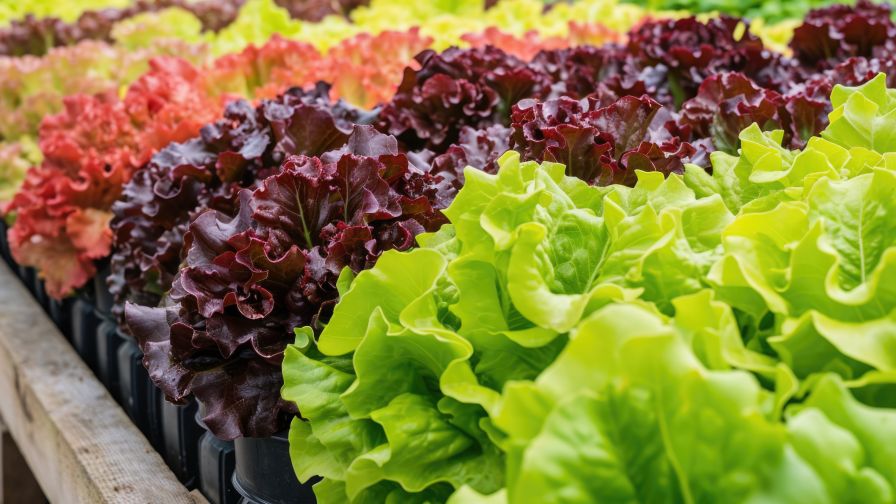

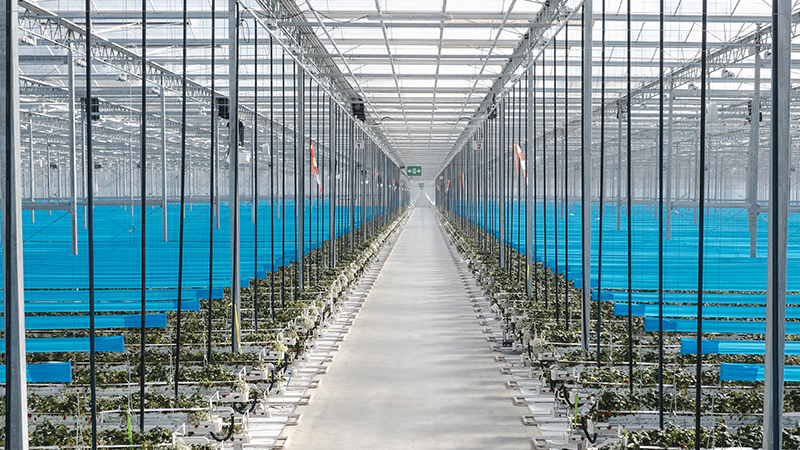


Crop type also plays a role. The report notes that growers of vegetables, herbs, tomatoes, and strawberries are more likely to deploy advanced HVAC and environmental controls than some floriculture operations, reflecting differences in production requirements and margins.
At the same time, grower responses highlight ongoing constraints. Survey participants cited system performance and upfront capital costs as leading considerations, with most indicating a preference for relatively short payback periods, typically under five years.
Increasing Focus on Integration and Data
Across site visits and field evaluations, the report points to a gradual shift toward more integrated control systems that link lighting, climate, and irrigation functions. These systems rely on sensor networks and software platforms to adjust environmental conditions in real time, with the goal of improving both resource efficiency and crop outcomes.
While adoption remains varied, the study suggests that data-driven control strategies are becoming more prevalent as growers seek greater visibility into system performance and energy use.
To access the full report, visit here.