Research Brief: Transforming Wastewater into Fertilizer for Food Production
 May 29, 2026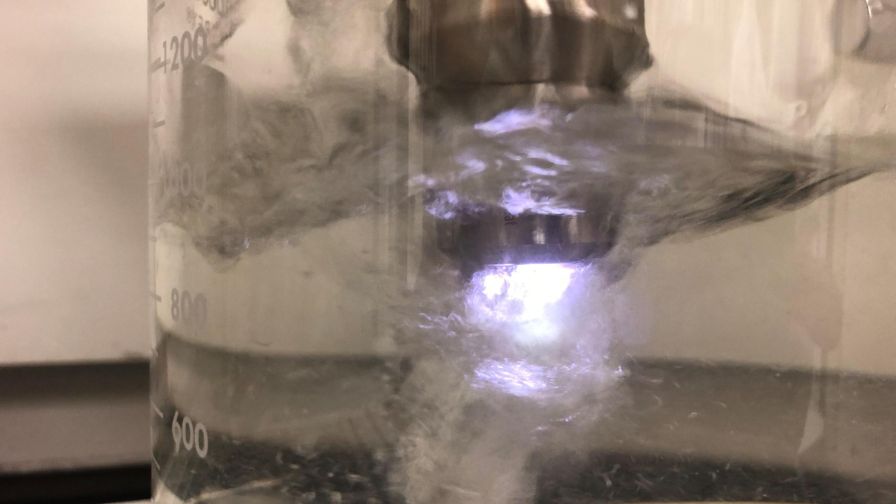
Plasma-Activated-Water. | Cornell University
A paper published in Green Chemical Engineering by a team of researchers from the University of Alberta in Canada documents the team’s work in developing an automated plasma-bubble technology capable of transforming wastewater into a nutrient-rich fertilizer for crop production.
This “automated microbubble-enhanced cold plasma activation (MB-CPA)” process is made possible by integrating cold plasma with microbubbles, which intensify the interaction between plasma and the liquid. This, in turn, transforms the wastewater into a reusable fertigation medium for plant growth within commercial hydroponic systems. In doing so, the process uses electricity, rather than chemical additives, to both improve production and treat wastewater.
The process was first tested in hydroponic garlic cultivation, using both tap and wastewater. Garlic grown through MB-CPA exposure displayed earlier germination, faster rooting and shoot development, higher biomass, and increased chlorophyll production compared to those grown with untreated wastewater. Furthermore, additional tests with reused wastewater demonstrated similar results. Lastly, the experiments showed that MB-CPA reduced turbidity and chemical oxygen demand (COD) while increasing sulfur and nitrogen compound (nitrate and nitrite) concentrations.
The researchers believe that this automated technology can help to advance circular and sustainable agriculture systems, where reusable wastewater and renewable electricity are integrated for minimal environmental impact while supporting food production.
For additional benefits and findings from the study, please read the full paper published by Green Chemical Engineering here.