Testing Jute vs. Organic Soil Growing Media in Microgreens Production
 July 13, 2026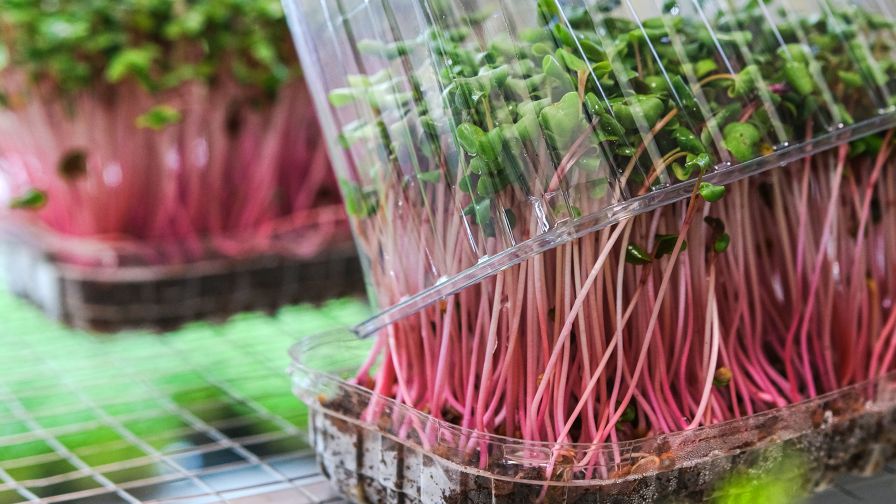
Photo: Adobe Stock
A farmer-led trial program from Sanders Funny Farm, located in Indianapolis, is testing two common growing media (jute fiber mats and organic soil) during commercial microgreen production to see which performs best. Updates on the project are reported by the Organic Farming Research Foundation (OFRF).
Tiffany Sanders, co-founder of Sanders Funny Farm, launched the trial after noticing mold and moisture, as well as uniformity issues, when using jute mats to grow arugula and cilantro varieties. She reached out and partnered with OFRF to conduct a structured and replicated experiment.
Early Trial Results Favor Organic Soil
The trial at Sanders Funny Farm uses a randomized complete block design with six replications per treatment, running one variety at a time, comparing paired 10-by-20-inch trays (one soil, one jute) under identical greenhouse conditions. Broccoli was the first crop selected for testing, with radish and black chia scheduled for later trial evaluations.
The trial measures harvest weight, production costs, disease incidence, and postharvest quality, all while keeping watering, lighting, and seeding rates consistent. The broccoli trial (seeded on May 24, 2026, and harvested on June 6, 2026) recorded that the jute mats initially produced faster and more uniform germination. However, the organic soil-grown broccoli quickly caught up and resulted in plants with taller, sturdier stems and richer color. During harvest time, this difference was significant, with soil-grown trays yielding approximately 8–11 ounces per tray, compared to 3–5 ounces for jute-grown trays.
For additional information and updates on the ongoing project at Sanders Funny Farm, read the original story on the OFRF website. Additionally, check out more featured stories from the OFRF’s Farmer-Led Trials Program.