How to Choose the Right Structure for Protected Crops
 October 9, 2026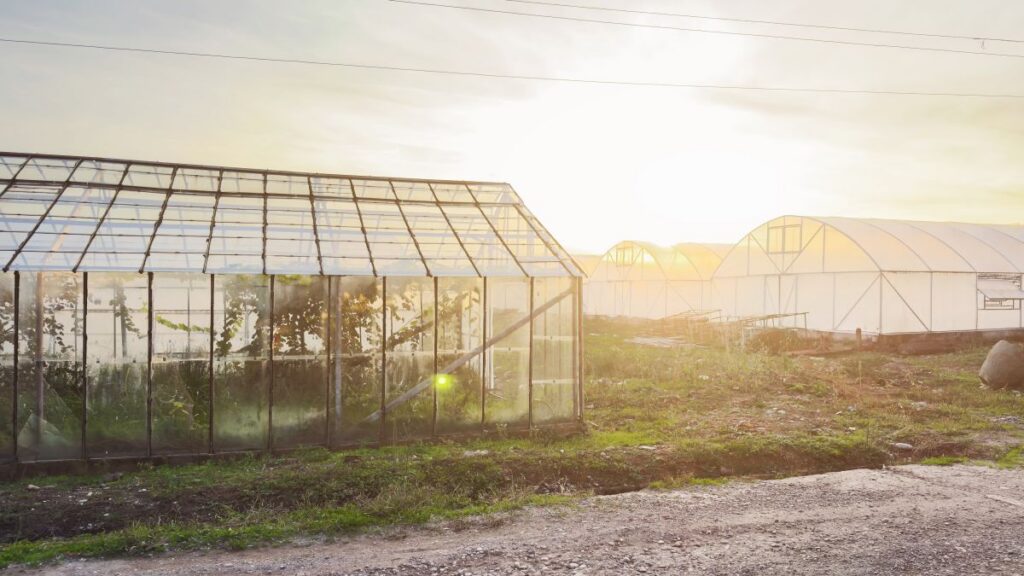
A commercial greenhouse concept. | Adobe Stock
Where do you begin when you’re ready to start growing under cover? There are many choices in crop protection structures and some significant differences among them, from how much space and environmental control you have to labor requirements and cost.
Matthew Kleinhenz, Extension vegetable specialist with The Ohio State University, starts with three questions: What are your goals? What’s your budget? And how much experience do you have with protected ag systems?
Depending on your answers, you may be fine with a relatively simple mid-level structure (like a caterpillar tunnel). Or perhaps a permanent high tunnel will offer a better balance of protection and investment. In some cases, your production goals may justify the active climate control of a greenhouse.
Here, Kleinhenz helps break down some of the differences between various structures.
Matching Protection to Investment
Each structure carries a combination of pros and cons based on factors such as initial and maintenance costs, ease of setup and removal, proven economic potential for various crops, and management requirements. These combinations provide growers with at least one option likely to meet their needs and resources.

Terminology around structures varies widely, but here’s the way Kleinhenz describes them for the purposes of this article:
Mid-Tunnels
Mid-tunnels are relatively inexpensive, temporary structures that offer more protection and cropping options than low tunnels without the commitment of a permanent installation. They can be a good step up from low tunnels if you still want flexibility but are looking to start and finish more crops under cover, experiment with protected production, and gain experience managing a larger enclosed space.
A tradeoff (compared with going right to a high tunnel) is labor. Unlike permanent structures, mid-tunnels require more time-sensitive hands-on setup, removal, and seasonal management.
High Tunnels
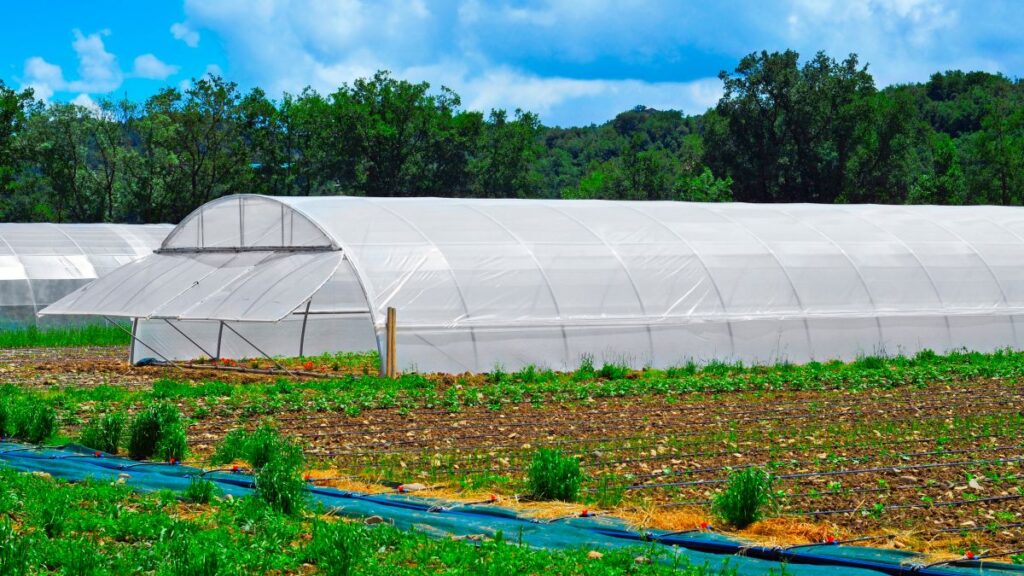
High tunnels. | Adobe Stock
High tunnels are considerably taller than mid-tunnels (up to 14 feet at the center). They rely on passive environmental control through ventilation rather than mechanical heating or cooling, with sides that can be raised or lowered. Once constructed, most high tunnels remain in place year-round while others can be moved. Regardless, protected space is always available so growers can focus on crop selection and management.
Often, Kleinhenz explains, a field grower’s first step into protected production is straight toward a high tunnel. And that’s partly because USDA’s Environmental Quality Incentives Program (EQIP) has helped make those structures more accessible. Through the EQIP, as part of the Natural Resources Conservation Services (NRCP), eligible growers can receive financial assistance to install high tunnels as a conservation practice.
But that’s not necessarily the best option right out of the gate. Kleinhenz has seen growers start with high tunnels and later realize that some production goals can be met just as effectively with less costly caterpillar tunnels. Experience also matters. A high tunnel gives growers protected space; it doesn’t manage that space for them. Kleinhenz compares it to a “huge shoebox.”
“You’ve got your shoebox,” he says, “and it’s up to you, now, to fill it and make everything happen inside.”
Greenhouses
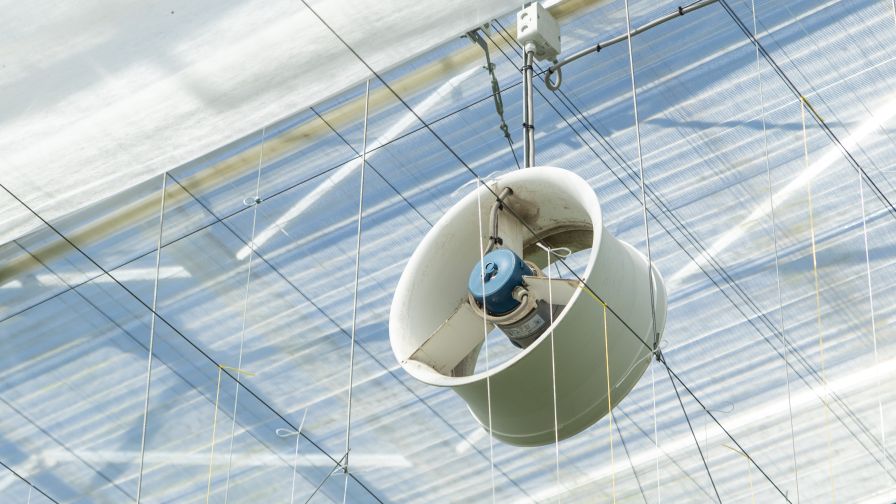
Greenhouses provide the highest degree of environmental control, but they also require the greatest investment. Kleinhenz defines a greenhouse (regardless of the material it’s made of) by the presence of active climate control: typically heating, and often cooling and supplemental lighting. Those systems allow growers to manage temperature and growing conditions much more precisely, but they also increase both capital costs and day-to-day management demands.
Consider Your Goals First
When Kleinhenz asks farmers about their goals for protected ag, the most common responses are extending the production season, diversifying into additional crops, reducing weather-related risk, and creating a more predictable production environment.
Some growers simply want earlier tomatoes for the farmers’ market. Others want to remain in the market longer into the fall, produce crops they couldn’t reliably grow outdoors, or, as Kleinhenz puts it (rather poetically), “lessen the impacts of an uncontrolled sky.”
The good news is that there isn’t a one-to-one relationship between goals and structures. More than one option may accomplish the same objective.
Take tomatoes, for example. If the goal is simply to get tomatoes to market earlier than field-grown crops, a low tunnel may provide all the protection needed. But if the objective is to be in the market significantly earlier—or to keep harvesting much later into the season—a mid-tunnel or high tunnel becomes a stronger fit because it buffers the crop from weather extremes over a longer growing period.
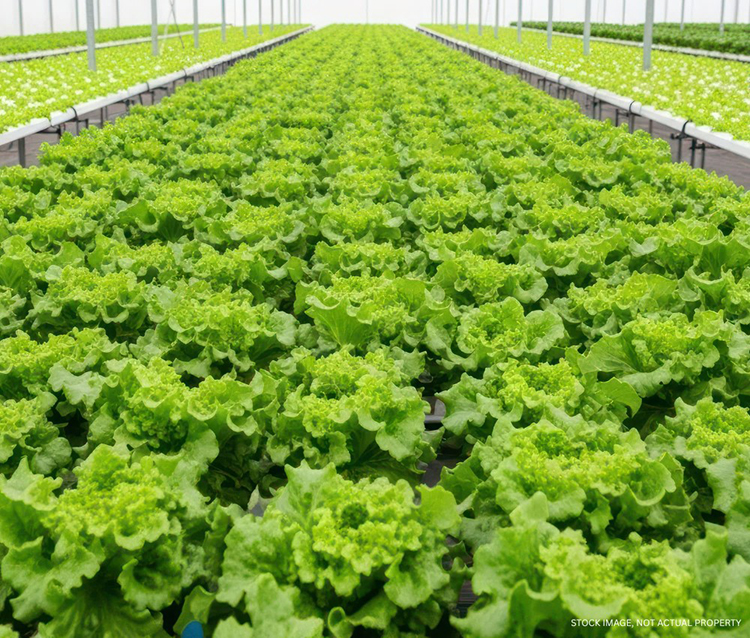
Likewise, Kleinhenz says, growers looking to diversify into crops such as leafy greens may find that multiple protected structures can support those plans, with the right choice depending more on economics and management than the crop itself.
For physical protection, every step up in structure reduces a grower’s vulnerability to pests, extreme temperatures, humidity, and more, but it also increases investment and management requirements. That’s why Kleinhenz encourages growers to think first about how much environmental control they actually need and to recall that low, mid-, and high tunnels can be used alone or in combination.
How Much Management Can You Handle?
Experience, Kleinhenz says, is just as important as goals in determining where to begin. Growing under cover requires a different management mindset than field production—ventilation, temperature, humidity, and irrigation become much more active decisions.
From an Extension perspective, he believes there’s value in gaining experience with simpler covered systems whenever practical. Working with low tunnels or mid-tunnels helps growers become familiar with the principles of protected production before taking on the larger, more complex environment inside a permanent high tunnel.
Among those who’ve never worked with mid- or high tunnels, there are some common misconceptions about protected ag that can affect success.
For one thing, Kleinhenz says, growers often underestimate how much management protected production requires. “Especially with high tunnels, I see an expectation that it’s going to save them a lot of time,” he says. “And while it may save time in one area, it might require more in another. So, the time savings might not be as dramatic as anticipated.”
A protected ag system is not a “set it and forget it” situation. “You can kill or greatly weaken your crop in a high tunnel if you don’t ventilate it in a timely fashion,” Kleinhenz adds. “If you try to skip away for a day and you don’t open a tunnel or irrigate it, you could have a real problem.” Vigilance is required around maintenance and repairs, as well.
Choose Your Site Carefully
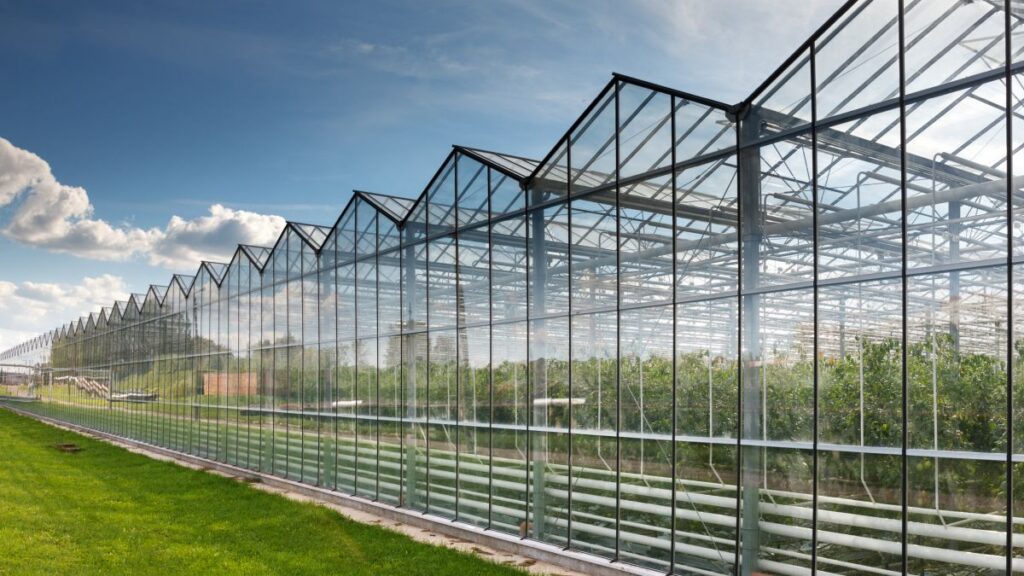
A large glass greenhouse. | Adobe Stock
Choosing the structure is only part of the decision. Where you put it can affect how well it works and how much labor it requires.
“Once you’ve positioned it, especially a high tunnel, you’ll be living with that from now on,” Kleinhenz says. “You can do retrofits and make adjustments, but you might be kicking yourself for not having taken the time and money to do it right up front.”
Access is one consideration: Can you and your team walk to it? Does it require a drive? “During certain times of the year, you may benefit from multiple trips per day, and it could be in the middle of the night,” Kleinhenz says.
Once you choose your site, he continues, preparation is important for issues like drainage. “Sometimes people forget to do the math. If it rains three-quarters of an inch on what was previously open ground that could absorb some of that water…well, now it’s sheeting off your roof and falling within 6 inches of your baseboards unless you have a gutter system.”
Preparing for the Future
With time, experience, and some positive payback on your efforts, you may eventually consider additional climate-control measures. Whether that’s automating a tunnel’s sides for easier ventilation or installing a lighting system, Kleinhenz says, it all comes back to your goals. And your budget.
“When you start to struggle with creating the right productive environment, then it makes sense to think about scaling up,” he says. “Maybe a particular crop has become significantly important, or you’re now finding physical or time-management issues that affect how productive that space is.”
Above all, he reminds growers to make sure the investment fits the operation. When clear goals, hands-on experience, and smart budget management are working together, you’re far more likely to choose a structure that delivers value for years to come.
Editor’s note: This article was originally published in our 2026 Industry Report: Protected Crops.