Opinion: It’s Time to Tell Our Safety Story
 July 21, 2026
Photo: Adobe Stock
There’s a very particular sound a muck boot makes when it pulls free from the vacuum of mud in a freshly flooded lettuce field. I don’t think I’ll ever forget that sound or the mix of wonder and concern I felt looking out over those vast fields, flooded by irrigation water from some distant canal. Exposed water. Endless mud. It is dirty. Dirty doesn’t mean contaminated, but it does add risk.
As attention shifts back to food safety amid the Cyclospora outbreak, I keep thinking about risk. There is always a risk that a pathogen finds its way into our food. Sometimes it’s negligence; sometimes it’s chance. We can’t build a zero-risk food system, but we can lower the risk. I believe CEA does that better than any other form of production.
Start with the observable framework. Most produce is regulated by the FDA under the Food Safety Modernization Act, whose Produce Safety Rule sets the legal floor. The market sets the ceiling because major retailers and distributors won’t buy from you unless you pass third-party, GFSI-audits like PrimusGFS or SQF. Those programs mean rigorous testing of water, air, surfaces, and product; daily proof of cold-chain integrity; logs for cleaning and disinfection; and employees trained until the standards are part of the culture. Everything is traceable. Many operations can follow a head of lettuce from seed lot to store shelf in minutes.
I believe those guidelines are sound, and they keep adapting. I’ve spent my career in this work, from nearly every angle. So why do people still get sick?
Odds. Do the math. Roughly 340 million people in this country eat more than a billion meals a day, drawn from billions of pounds of food grown, packed, and shipped. There is no zero risk. The reality is that our food safety system delivers an extraordinary success rate. Of course, none of that matters when someone gets sick or dies.

Then there’s the gap between policy and practice. Plenty of companies follow every rule, keep every record, and post a spotless audit score and have recalls. Sometimes it’s chance. Sometimes it’s culture and the daily follow-through no checklist can capture. Did everyone wash their hands? Did someone track something in on their shoes? Was the test run correctly? Was the temperature really checked? I like to repeat a line to my employees, “treat it like you’ll eat it.”
That’s the difference between a policy and a practice.
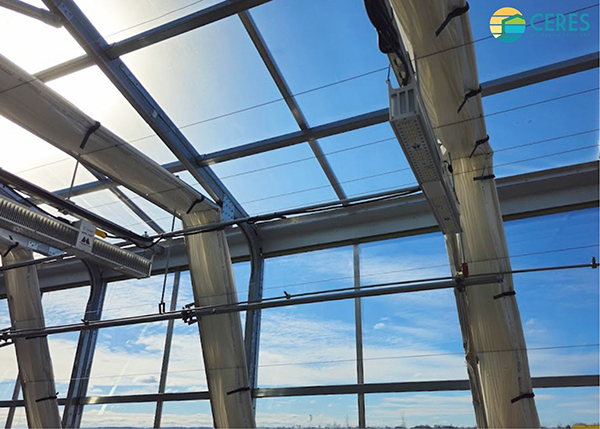
This is where CEA pulls ahead. A protected, enclosed system carries lower risk by design due to far less exposure to wildlife, runoff, and open irrigation water; sanitation facilities sited away from the growing area, not parked at the field’s edge. The water comes from controlled sources, disinfected, and tested weekly. For a waterborne parasite like Cyclospora, that shrugs off a chlorine rinse, that control over water is exactly the point. The best CEA growers then layer the same proven food safety steps on top of an already safer product.
None of this is a guarantee, but it is better, and it’s time we said so plainly. Our goal shouldn’t be individual messages of certification stamps at shoppers. It should be explaining how, as an industry, we provide lower risk. We do this through protected facilities, water testing, traceability, and daily discipline. Get into the dirty details. Tell people how our food is grown and protected, and confidence follows. That’s a story worth telling, together.