Vertical Farm vs. Open-Field Lettuce: A Comparative Environmental Study
 September 23, 2025
 A recent study conducted at the University of Surrey in England compared the environmental impacts of growing lettuce in vertical farms and open fields. Researchers analyzed a commercial vertical farm against two field farms in the U.K. (one using peat and one using mineral soil) and one field farm in Spain (mineral soil) using a cradle-to-store assessment, a tool that measures the climate footprint of a food product from when it’s harvested until it reaches grocery store shelves.
Key Findings from the Study
The researchers found that vertical farming produces higher environmental impacts per kilogram of lettuce across most categories, despite claims of being more sustainable. Looking at the U.K.’s 2022 electricity grid mix, vertical farms generated 4.71 kg CO₂ equivalent per kg of lettuce—about eight times higher than field farming (0.55-0.59 kg CO₂). Even when using 100% renewable energy, vertical farms still produced higher emissions (0.93 kg CO₂ eq) than field alternatives.
Electricity consumption was the dominant environmental factor in vertical farming, accounting for 31-84% of climate impact depending on the energy source. The study found that jute fiber grow plugs were another major contributor, as they are responsible for up to 94-96% of land use impacts.
System Comparisons
U.K. field farms showed similar climate impacts regardless of soil type—mineral soil farms (0.58 kg CO₂ eq) and peat-based farms (0.57 kg CO₂ eq) performed comparably per kilogram of lettuce. However, peat soils had higher greenhouse gas emissions but required fewer inputs due to higher productivity.
Spanish field farms had the lowest climate impacts (0.22-0.57 kg CO₂ eq), with some scenarios showing negative soil emissions due to high compost applications. However, transportation to the U.K. (2,600 km) was a major environmental hotspot, contributing up to 128% of total climate impact in some scenarios.
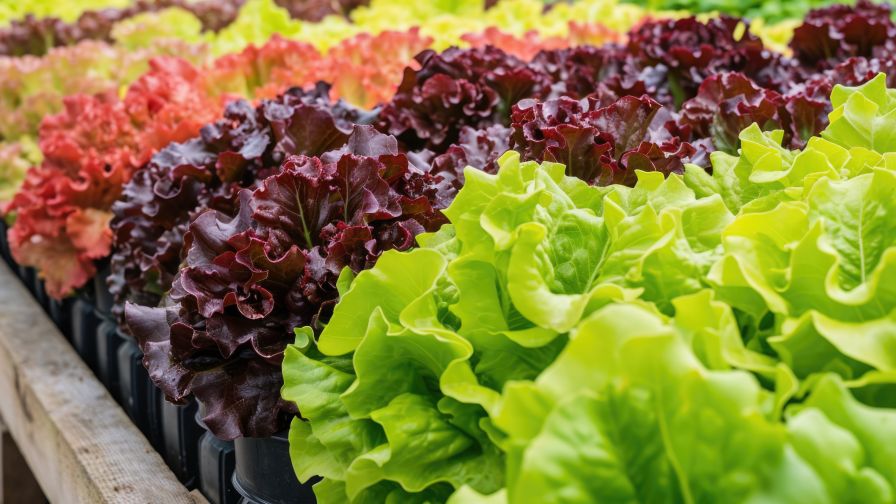

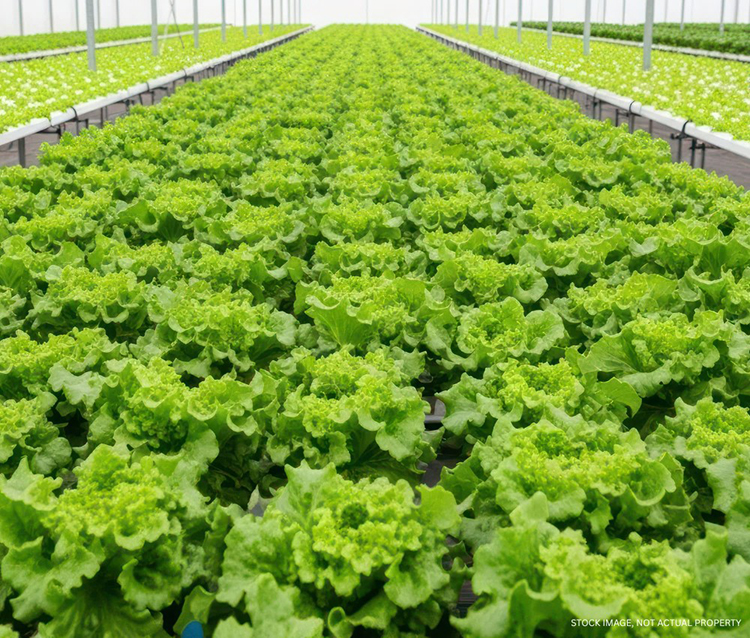
Vertical farming’s main advantage is higher yields, as it produces about 24 times more lettuce per square meter compared to field farming. This superior space efficiency could theoretically free up 96% of current lettuce farmland (potentially 8,267 hectares in the U.K.) for other uses like reforestation or biodiversity conservation.
Vertical Farming’s Limitations
The research suggests that vertical farming currently cannot compete environmentally with field farming on a per-kilogram basis, even with renewable energy. However, the land-sparing potential could offer indirect environmental benefits if freed land is used for carbon sequestration or biodiversity enhancement.
Gretchen Schimelpfenig, senior energy engineer at energy consulting firm Energy Resource Integration, offers her perspective on the findings. “The advantages of vertical farming have never included energy,” she says. “Vertical farms serve climates that cannot grow tender crops year-round, regions with constrained water resources, and cities with limited local agriculture so communities can eat fresh, local, nutritious food.”
Unfortunately, she adds, “The study’s data shows that renewable electricity does not balance the scales for vertical farming and field farming. While production from vertical lettuce farms can be 28 times better than fields of lettuce, the greenhouse gas emissions from indoor production are 63% worse per kilogram of product. Vertical farms generate larger yields, but each leaf adds a carbon cost. Using the study’s data, every square meter of a vertical lettuce farm produces 47 times more greenhouse gases than a square meter of a lettuce field.”
While vertical farming offers food security and local production benefits, significant technological improvements and energy decarbonization are essential to matching traditional agriculture’s environmental impacts.
For more details, you can find the full study here: https://onlinelibrary.wiley.com/doi/full/10.1002/fes3.70117.