Why Oishii Waited to Scale
 August 7, 2026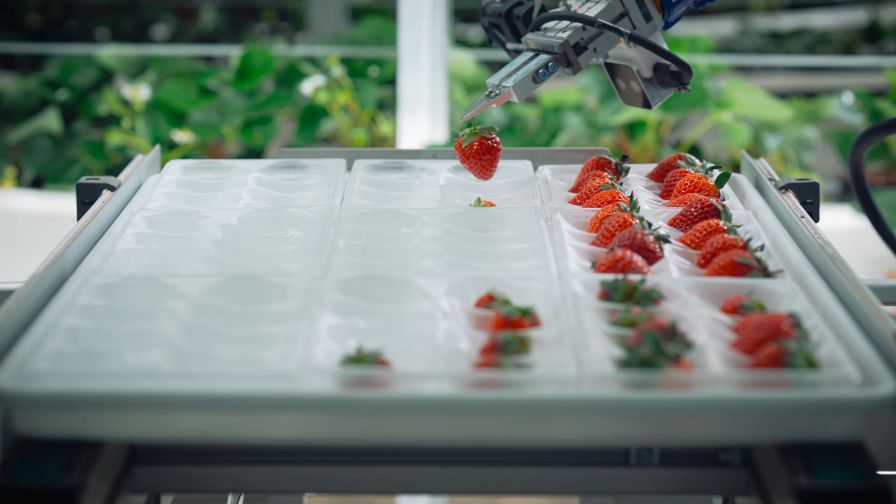
Recent investments confirm Oishii’s commitment to robotics and automation, while new packaging and lower-priced berries sweeten the appeal to consumers. | Oishii
The vertical farming operation Oishii holds a unique place in the global CEA industry as the grower that somehow made $50 strawberries a thing—and is not only still around, but expanding.
In May 2026, Oishii announced the first closing of a $150 million Series C round of financing, which will support increased production capacity, farm infrastructure, further robotics integration, new product formats, and continued R&D in the U.S. and Japan. The Jersey City, N.J.-based company now distributes across 18 U.S. states and entered Toronto in February 2026 as its first international retail market. Chief Commercial Officer Rita Hudetz has said that Oishii hopes to double its U.S. retail presence from more than 300 locations by the end of 2026.
At the same time, the company has moved well beyond the nearly $50 trays that introduced the Omakase Berry in 2018, adding the Koyo and Nikko varieties, and restructuring its lineup around new pack sizes and Premium and Reserve grades. Its current fresh-berry portfolio ranges from a $4.99 suggested retail price for a 3-ounce Strawberry Bento Box—its lowest price point to date—to $7.99 Premium Koyo and Nikko packs and an $11.99 Reserve Omakase offering.
For CEA growers of all kinds, whether they produce berries, leafy greens, tomatoes, or herbs, the company’s approach offers insight into the tricky challenge of scaling a high-value crop while maintaining quality, retailer confidence, and increasingly favorable unit economics. CEAg World spoke with Hudetz about the steps that brought Oishii to this threshold, the challenges that remain, and where she sees indoor fruit production heading next.
CEAg World: What operational or financial metrics told you Oishii was ready for another major expansion phase, especially in strawberries, which has shown to be a difficult indoor crop to make profitable?




Oishii Chief Commercial Officer Rita Hudetz. | Oishii
Rita Hudetz, Oishii: The decision to expand wasn’t driven by top-line growth alone. The metrics we were watching closely were around unit economics, production consistency, customer demand, and retailer confidence. We wanted to see that we could reliably produce a premium product at scale, maintain strong sell-through, and continuously improve efficiency across the farm without compromising the quality of the consumer experience. As we hit those milestones, we gained confidence that our model was becoming increasingly repeatable and economically sustainable.
Oishii’s CEO, Hiroki Koga, has said strawberries are “one of the hardest paths in indoor farming.” Looking back, what makes them so difficult to commercialize, and what technical or biological challenges are you still working to solve?
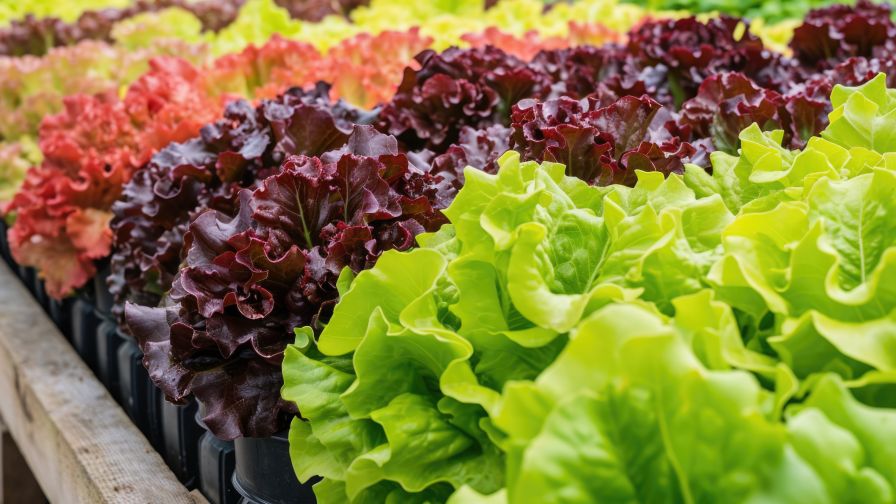
One of the biggest challenges with strawberries is that you’re balancing a living crop with a much more complex operating system. Unlike leafy greens, strawberries depend on more variables working in sync, from bees pollinating the plants to humans and robots supporting harvesting and farm operations, to maintaining the ideal environment for the plants themselves.
They’re also highly cyclical, which makes planning against commercial demand especially complex. Because the crop is so delicate, even small shifts across those systems can affect the quality and consistency. A major focus early on was learning how to stabilize and coordinate all of those moving parts so we could deliver the same premium berry experience crop after crop.
We’re still actively working to improve planning across the farms. We’re also continuously focused on pest management and quality control. Those aren’t challenges that ever feel fully “solved”—they’re ongoing practices that are foundational to our success and require constant monitoring, adjustment, and care to consistently deliver the best possible fruit.
Oishii has steadily lowered pricing from nearly $50 trays to products starting under $5. What specifically enabled that shift?
At the beginning, we intentionally started with a very premium product because it helped us establish awareness, credibility, and prove that we could deliver something truly differentiated. As we’ve scaled, the cost improvements have come from multiple layers.
Berry varietal optimization has played a big role in improving yield and consistency. At the same time, automation, operational learnings, and the integration of Tortuga’s robotics have helped us become much more efficient in our growing and harvesting. [Oishii acquired key intellectual property and assets from startup Tortuga AgTech in March 2025.]
And then there are the packaging and format innovations that allow us to reduce the entry price and meet more consumers where they are. With our newer Nikko Berry stay-fresh top-seal packaging, for example, we moved away from traditional plastic clamshells, reducing plastic use by more than 80%, while creating a format that supports freshness and accessibility. Our premium preserves line is another example of that thinking, giving us a way to extend the Oishii experience beyond a few days and to use upcycled, pesticide-free, non-GMO berries in a different format.
Accessibility for us doesn’t mean compromising on quality. It’s about continuing to raise efficiency and innovating on packaging so more people can experience the same product, whether that’s a special occasion tray or a more everyday format.
You’ve invested more heavily in robotics through the Tortuga acquisition and the March 2026 MISUMI partnership. Which greenhouse or indoor farm tasks do you believe can be realistically automated in soft fruit production today?
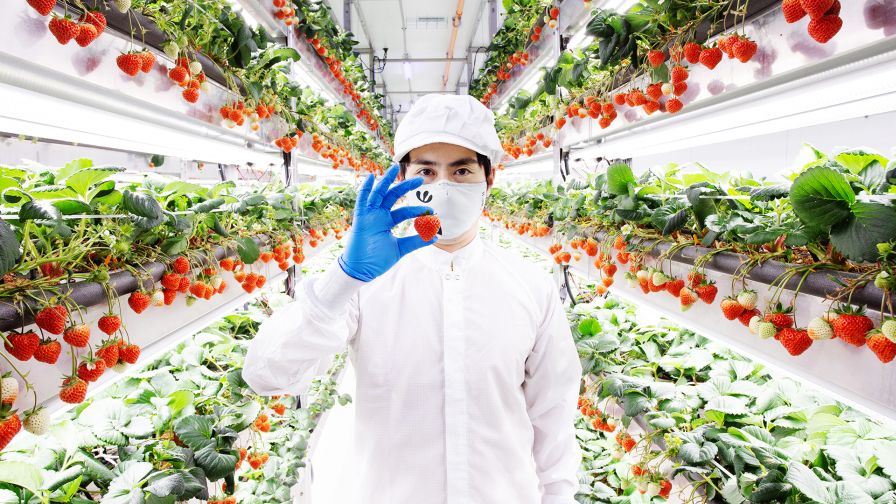
Oishii CEO Hiroki Koga says that strawberries are “one of the hardest paths in indoor farming.” | Oishii
Where automation is already very effective is in the repeatable, structured processes that happen every day and account for the majority of labor spent within a farm system. Areas like environmental control, irrigation, pollination, harvesting, packaging, material handling, and the broader mechanization and standardization of our production modules are where machines outperform humans because consistency, precision, and reliability matter more than nuance.
Robotic harvesting is a key area of focus for us. The acquisition of Tortuga has expanded our harvesting robotics and engineering capabilities as we continue to push automation into highly structured tasks like berry picking. As these systems improve, they create opportunities to increase efficiency, improve consistency, and scale production more effectively across our network.
That’s where partners like MISUMI come in, helping us standardize and industrialize the underlying infrastructure so each farm becomes more repeatable and easier to scale. The more standardized the environment, the more effectively we can deploy automation and robotics across the business.
Vertical farming is getting a lot of bad press lately. How do you respond to the criticism, and how has this environment changed the way you operate and/or communicate with investors and retailers?
A lot of the recent scrutiny around vertical farming is tied to several high-profile failures in the space, particularly companies that scaled very quickly before the economics or operations were fully proven. In many cases, the technology itself wasn’t necessarily the issue—it was the challenge of building a sustainable business model around a highly complex agricultural system.
From day one, we’ve tried to stay focused less on the narrative and more on building a strong operational foundation by continuously improving both the product and the system behind it. Because we’re vertically integrated, much of our technology and production are in-house, so we’re able to iterate quickly, improve efficiency over time, and make adjustments across the entire operation rather than relying on a single breakthrough moment.
In conversations with retailers today, the focus is very practical. It’s about performance, consistency, and how the product fits into the broader produce set. On the consumer side, we’ve also found that “smart farming” resonates more naturally than “vertical farming” because consumers ultimately care most about freshness, taste, appearance, and whether the experience feels worth it.
Do you consider Oishii fundamentally a produce company, a robotics company, or a technology platform company?
We are a deep tech company with a very strong consumer orientation. Our work sits at the intersection of agriculture, robotics, plant science, and consumer food, with the goal of fundamentally transforming food production rather than incrementally improving it. While our internal expertise spans many disciplines, we’re all united toward the same mission of improving the consumer experience of produce and solving access to food for future generations.